How can parents support an autistic young adult’s social development without overstepping, overprotecting, or making things worse? The most effective approach is to stop measuring social progress against neurotypical milestones and start building environments where genuine connection is possible. Supporting autistic young adult social development means understanding how your child actually connects — through shared interests, structured activities, and neurodiversity-affirming communities — and then removing the barriers that stand between them and those experiences.
This is harder than it sounds. Most parents have spent years trying to help their child “fit in.” Letting go of that goal, and replacing it with a different one, requires a real shift in perspective. But the research is clear: autistic social connection follows different pathways than neurotypical connection, and trying to force the neurotypical model does not just fail — it actively causes harm.
This guide is for parents who are ready to try a different approach.
A note before you begin: every autistic young adult is different. Your child’s social needs, communication style, and readiness for connection are unique to them. Use these steps as a framework to adapt, not a checklist to complete in order.
Step 1: Understand the Difference Between Social Difficulty and Social Disinterest
This distinction is foundational, and getting it wrong leads to a lot of misguided interventions. Many autistic young adults are described as “not wanting friends” or “preferring to be alone.” Sometimes that is accurate. Often, it is not.
Research consistently shows that the majority of autistic individuals want social connection. What they lack is not the desire — it is the roadmap. Social initiation, small talk, reading unspoken cues, managing the unpredictability of open-ended social situations: these are genuinely difficult skills that do not come naturally to many autistic people, and the repeated failure to execute them can look, from the outside, like indifference.
Before you conclude that your young adult does not want to connect, ask a different question: what would connection look like if it did not require any of the things they find hardest? The answer to that question is your starting point.
Step 2: Stop Measuring Against Neurotypical Milestones
Your young adult may not have a large friend group by age 22. They may not be dating. They may not be attending parties or joining clubs. None of that means their social development has failed.
Neurotypical social milestones — the ones embedded in school culture, family expectations, and popular media — were not designed with autistic neurology in mind. Applying them to autistic young adults produces a constant experience of falling short, which erodes confidence and motivation over time.
A more useful set of questions: Does your young adult have at least one person they feel safe with? Do they have spaces where they can be themselves without masking? Are they moving, however slowly, toward greater comfort in social situations? Progress on those dimensions is meaningful, even when it does not look like what you expected.
Step 3: Find Interest-Based Communities, Not General Social Settings
Generic social settings — parties, mixers, open-ended group activities — are among the hardest environments for autistic individuals to navigate. They are unstructured, unpredictable, and heavily dependent on small talk and spontaneous social initiation. They are also, frankly, not that enjoyable for a lot of people, autistic or not.
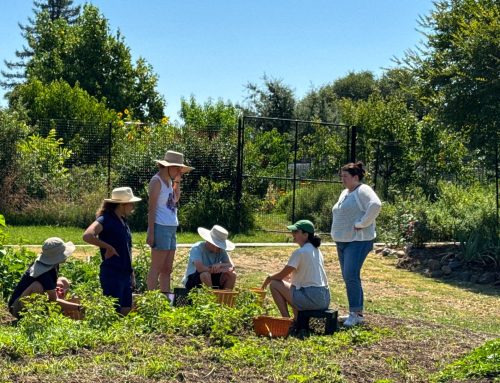
Interest-based communities are different. When a shared activity or topic provides the structure and the reason for being there, the social demand drops significantly. Conversation has a natural anchor. The interaction has a purpose beyond performing sociability.
Look for local groups organized around your young adult’s specific interests: tabletop gaming, coding, film, nature, art, music, animals, cooking. Online communities can be a bridge, but in-person connection — even occasional, even structured — builds something that screen-based interaction cannot fully replicate.
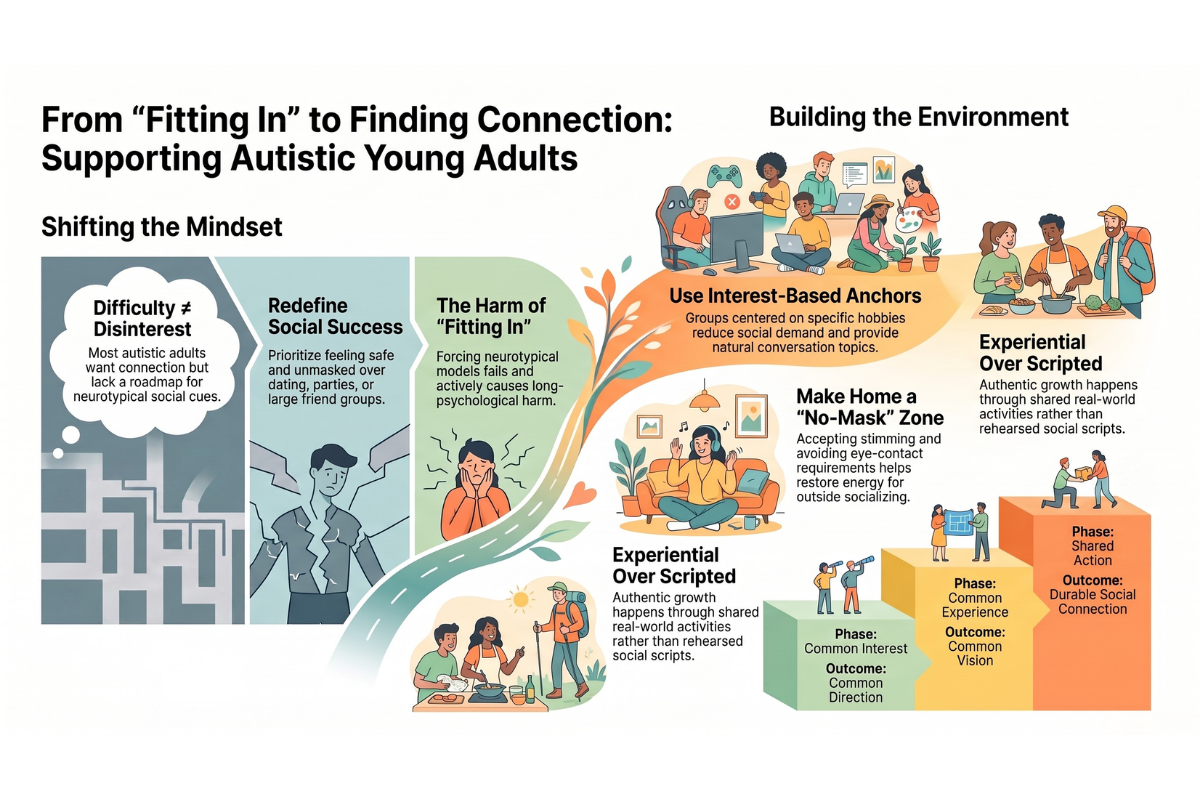 DOWNLOAD THE QUICK REFRENCE GUIDE: Supporting Autistic Young Adults: A Guide to Social Development
Step 4: Support Without Scripting
This is where many well-intentioned parents go wrong. The impulse to prepare your young adult for every social scenario — to rehearse conversations, script responses, and anticipate every possible outcome — is understandable. But it often backfires.
Over-scripting teaches your young adult to perform social interaction rather than experience it. It increases anxiety by raising the stakes of every exchange. And it communicates, however unintentionally, that their natural way of engaging is not acceptable.
Support looks different from scripting. It means being available to debrief after a social experience without judgment. It means helping them identify what felt good and what felt hard, without rushing to fix the hard parts. It means trusting that they will learn more from real experiences — including awkward ones — than from rehearsed scenarios.
Step 5: Recognize and Reduce Masking Demands at Home
Masking — suppressing autistic traits to meet neurotypical social expectations — is exhausting. Studies on autistic burnout link chronic masking to elevated rates of anxiety, depression, and social withdrawal. If your young adult is masking heavily in social situations outside the home, the last thing they need is to come home to an environment where masking is also required.
Home should be the place where the mask comes off. That means accepting stimming without comment. It means not requiring eye contact during conversation. It means allowing silence without interpreting it as rudeness or withdrawal. It means letting them decompress in whatever way works for their nervous system, without a timeline.
A young adult who has a genuine safe space at home has more capacity for social engagement outside of it. The two are directly connected.
Step 6: Know When to Bring In Structured Support
There is a limit to what parents can provide, and recognizing that limit is not failure — it is good judgment. Structured social development programs offer something that family support cannot: peer community, professional facilitation, and real-world experiences designed specifically for autistic young adults.
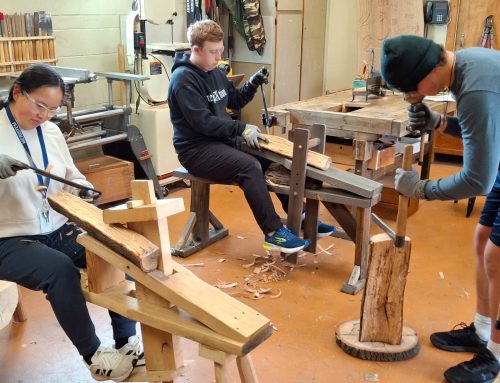
The most effective programs are not social skills classes that teach autistic people to act neurotypical. They are experiential environments where young adults build genuine connection through shared activities, shared challenges, and shared growth.
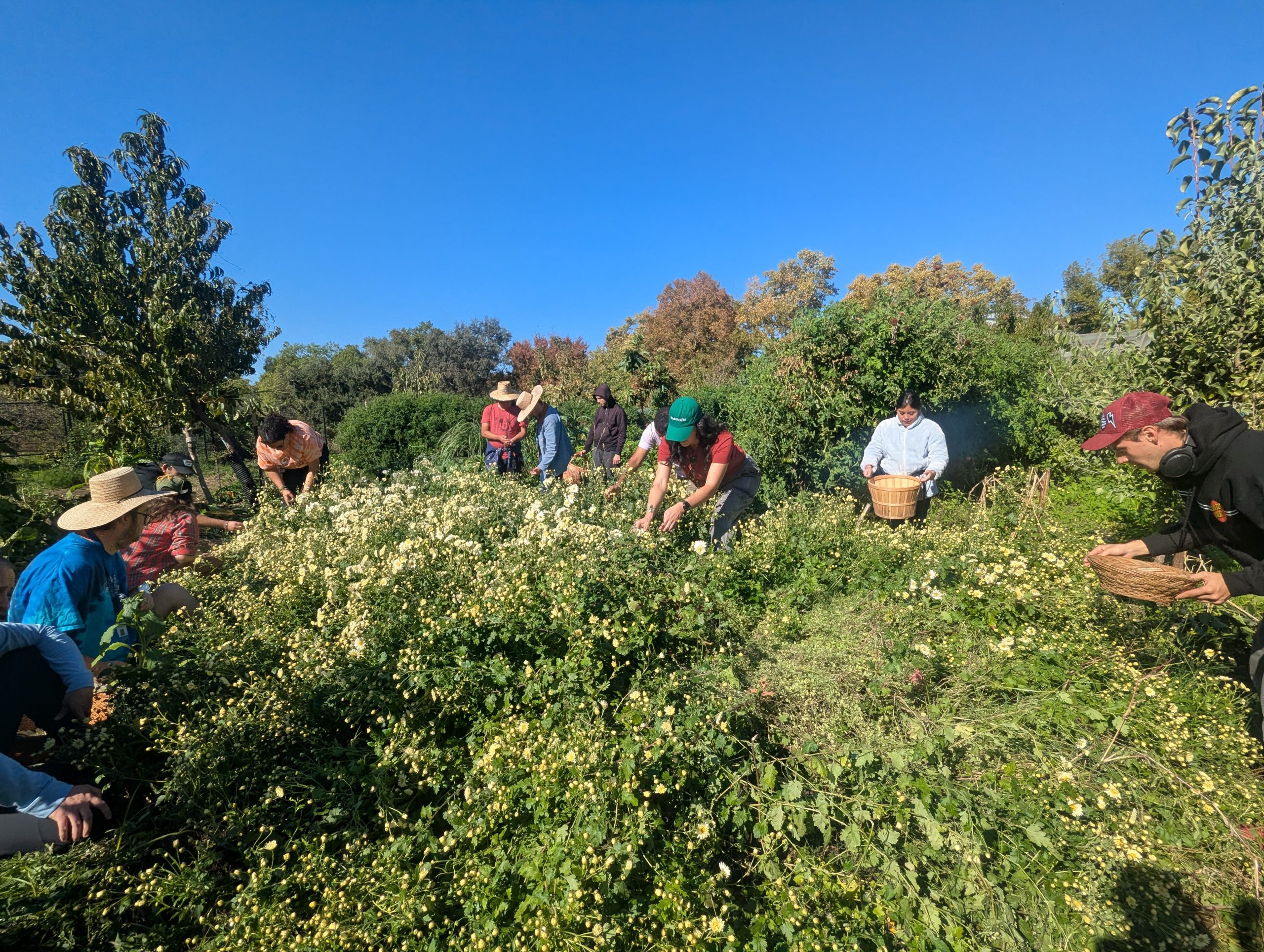
At Meristem, our Social Growth program is built on exactly this model. Students develop social skills not through instruction, but through doing — working together in the culinary kitchen, navigating the American River, managing the demands of a real residential community. The social development that happens in those contexts is authentic, durable, and built on a foundation of genuine shared experience.
The progression matters: common interest leads to common direction, which leads to common experience, which leads to common vision. That is how lasting social connection is built — for autistic and neurotypical people alike.
A Final Word for Parents
Supporting your young adult’s social development is a long game. There will be setbacks. There will be periods of apparent stagnation followed by sudden leaps forward. There will be moments when you are not sure whether to push or pull back.
The most important thing you can do is stay curious rather than anxious. Ask questions instead of giving answers. Trust that your young adult is doing the best they can in a world that was not built for them — and that with the right environment and the right support, they can build a social life that is genuinely their own.
For a deeper look at the full framework of social and emotional development for autistic young adults, read our pillar page: How to Build Confidence in Autistic Young Adults: From Self-Doubt to Self-Efficacy.
Ready to explore structured support? Visit our Classes and Offerings page to learn how Meristem’s programs support social and emotional growth.
Download the 2025 Impact Report
See the impact for yourself. Our 2025 Impact Report shares real outcomes. Employment, independence, and the milestones our students are reaching. Get your free copy below.
Sign Up for Our Newsletter
Voices of Community Podcast
Join us for conversations with autistic adults, families, and professionals who are helping shape a more inclusive world. Each episode shares personal stories, insights, and perspectives from across the Meristem community and beyond.