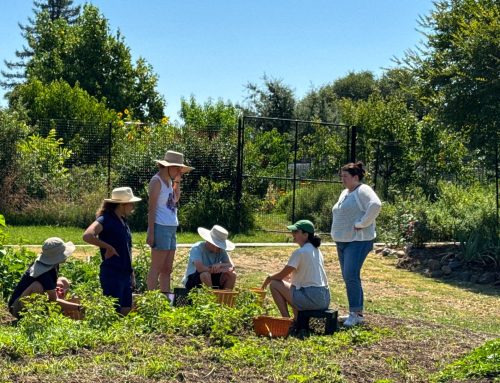
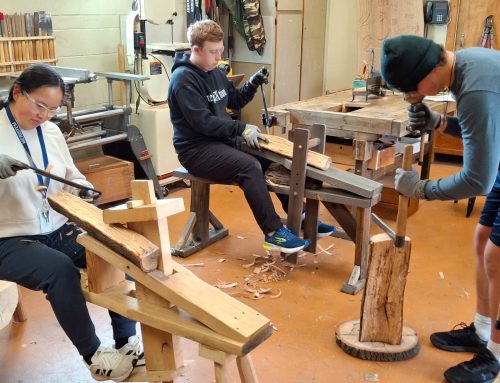
How do we move an autistic young adult from a place of chronic self-doubt to a state of genuine self-efficacy? Autism confidence building is not achieved through empty praise or artificial success; it is forged through the deliberate process of meeting resistance, mastering real-world skills, and developing physical and emotional competence. When autistic individuals are provided with the right level of challenge and the scaffolding to succeed, they build the internal resilience necessary to navigate adulthood with dignity and independence.
Confidence is the bedrock upon which all other developmental milestones rest. Whether the goal is securing employment, forming a romantic relationship, or simply navigating a crowded grocery store, the underlying requirement is the belief that one is capable of handling the situation. For many autistic young adults, this belief has been systematically eroded over years of navigating a world designed for neurotypical brains. Rebuilding it requires a fundamental shift in how we approach education, therapy, and daily support.
This guide explores the mechanics of building true confidence in autistic young adults. We will examine the roots of the “confidence gap,” the critical role of mastery experiences, and how physical competence translates directly into emotional resilience.
Why Confidence is Foundational to All Other Development
In the context of autism support, we often focus heavily on skill acquisition: learning to cook, learning to budget, learning to interview for a job. However, a skill is useless if the individual lacks the confidence to deploy it when it matters. Confidence is the catalyst that transforms a learned skill into an applied behavior.
Consider the transition to independent living. An individual may know the mechanical steps of doing laundry, but if the sensory environment of a laundromat or the unstructured time of a weekend afternoon induces paralyzing anxiety, the laundry will not get done. The barrier is not a lack of skill; it is a lack of self-efficacy. That is, the belief in one’s own capacity to execute behaviors necessary to produce specific performance attainments, as Albert Bandura first defined it.
When we prioritize autism confidence building, we are not just making young adults feel better about themselves; we are equipping them with the psychological armor required to face the inevitable frictions of adult life. Confidence allows an individual to tolerate the discomfort of a new situation, to recover from a mistake without spiraling into a meltdown, and to advocate for their needs in the workplace. It is the difference between knowing how to do something and actually doing it.
The Confidence Gap: Understanding the Roots of Self-Doubt
To build confidence, we must first understand why it is so often lacking in autistic young adults. The “confidence gap” is rarely an inherent trait of autism itself; rather, it is a learned response to repeated experiences of failure, misunderstanding, and negative feedback.
From a young age, many autistic individuals receive constant, subtle (and sometimes overt) messaging that their natural ways of being are incorrect. They are corrected for stimming, reprimanded for missing social cues, and graded against neurotypical benchmarks that do not reflect their cognitive strengths. This chronic experience of falling short of expectations creates a profound sense of inadequacy.
Furthermore, the sensory and executive functioning challenges associated with autism can make the world feel unpredictable and unsafe. When an individual cannot trust their environment or their own body’s response to it, developing a secure sense of self is incredibly difficult. Research published in the journal Autism indicates that youth with autism spectrum disorder are at a significantly higher risk for developing low explicit self-esteem, which is closely tied to co-occurring internalizing symptoms like anxiety and depression.
| Source of Self-Doubt | Description | Impact on the Autistic Individual |
|---|---|---|
| Chronic Correction | Constant redirection of natural autistic behaviors (e.g., forced eye contact, suppressed stimming). | Internalizes the belief that their authentic self is flawed or unacceptable. |
| Sensory Unpredictability | The inability to predict or control overwhelming sensory input in daily environments. | Creates a state of hypervigilance, making it difficult to feel secure or confident in new situations. |
| The “Hidden Curriculum” | Repeatedly failing to navigate unwritten social rules that neurotypical peers grasp intuitively. | Leads to social withdrawal and the assumption that social failure is inevitable. |
Understanding these roots is crucial. We cannot simply tell an autistic young adult to “be more confident.” We must actively dismantle the environments and expectations that created the self-doubt in the first place.
Building Self-Efficacy Through Mastery Experiences
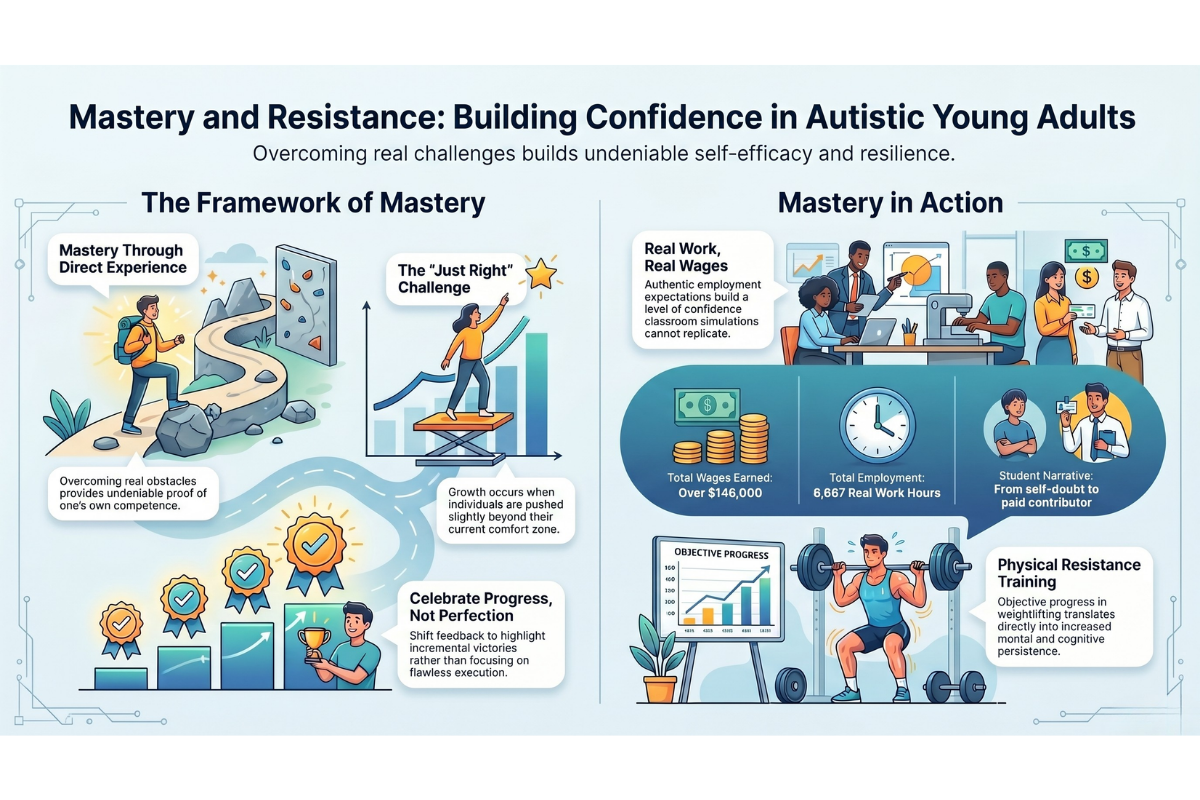
If self-doubt is learned through repeated failure, then self-efficacy must be learned through repeated success. However, this success cannot be manufactured or hollow. Bandura’s foundational theory of self-efficacy holds that the most powerful way to build a strong sense of efficacy is through “mastery experiences” — the direct, personal experience of overcoming a genuine challenge.
A mastery experience occurs when an individual faces a real obstacle, exerts effort to overcome it, and achieves a tangible result. It is the undeniable proof of one’s own competence. For autistic young adults, these experiences are transformative. When a student successfully builds a table in the woodshop, or navigates the public transit system independently, or manages a busy shift at a café, they are not just completing a task; they are rewriting their internal narrative.
The Meristem 2025 Impact Report provides compelling evidence of this principle in action. Students in the Work Skills program earned over $146,000 in total wages across 8,667 hours of real employment. This is not charity work; it is work with real expectations, real customers, and real consequences. The confidence gained from earning a paycheck and contributing meaningfully to a workplace is profound and cannot be replicated in a simulated classroom environment.
The Importance of Appropriate Challenge
The key to facilitating mastery experiences is finding the “just right” level of challenge. If a task is too easy, success feels meaningless and does not build self-efficacy. If a task is too difficult, failure reinforces the existing narrative of incompetence.
This requires a highly individualized approach. What constitutes an appropriate challenge for one autistic young adult may be overwhelming for another. The goal is to push the individual slightly beyond their current comfort zone, providing enough scaffolding to ensure success, but not so much that the achievement feels unearned.
This concept is central to the “Meeting Resistance” framework. Resistance is not something to be avoided; it is the friction required for growth. Whether it is the heat of a commercial kitchen, the physical exertion of a hike, or the social complexity of a customer interaction, these resistances are the raw materials from which confidence is forged. The role of the educator or parent is not to remove the resistance, but to help the young adult develop the tools to meet it.
Celebrating Progress, Not Just Perfection
When building confidence, the metric for success must shift from perfection to progress. Autistic individuals are often highly self-critical, holding themselves to impossible standards. If the only acceptable outcome is flawless execution, the fear of failure will prevent them from even attempting the task.
We must teach young adults to recognize and celebrate incremental growth. If a student who previously could not tolerate the sensory environment of a grocery store manages to walk down one aisle before needing to leave, that is a massive victory. It is a mastery experience relative to their previous baseline.
This requires a shift in how we provide feedback. Instead of focusing on what went wrong, we must highlight what went right and what was learned from the attempt. “You didn’t finish the laundry, but you successfully sorted the clothes and started the washer. That’s a huge step forward. What can we try differently next time to help you finish the cycle?” This approach frames challenges as opportunities for problem-solving rather than evidence of inherent flaw.
How Resistance Training Builds Confidence Through Persistence
One of the most direct and measurable ways to build self-efficacy is through physical resistance training. The connection between physical strength and mental resilience is well-documented, and it is particularly relevant for the autistic population.
Recent research published in the Journal of Autism and Developmental Disorders on autistic young adults’ experiences with strength training found that participants perceived significant improvements in both their physical and mental health. The structured, predictable nature of lifting weights provides a clear, objective measure of progress. When an individual sees the weight on the bar increase week after week, they are receiving undeniable feedback that their effort is producing results.
This physical persistence translates directly into cognitive persistence. The discipline required to complete a challenging set of squats is the same discipline required to push through the frustration of a difficult work task or a complex social interaction. By engaging in regular resistance training, autistic young adults are literally practicing the act of overcoming difficulty. They are building the physical and mental stamina required to navigate a demanding world.
The Connection Between Body Competence and Emotional Confidence
The benefits of physical activity extend beyond the weight room. Therapeutic movement and the development of body competence are essential components of autism confidence building. Many autistic individuals struggle with interoception and proprioception (the ability to understand where their body is in space and what it is feeling internally). This physical disconnect often manifests as clumsiness, poor posture, and a general sense of unease in one’s own skin.
When we help young adults develop physical coordination and stamina, whether through roller skating, hiking, or structured gym exercises, we are helping them inhabit their bodies more comfortably. According to Autism Spectrum News, exercise-based therapeutic interventions statistically increase self-confidence and independence in autistic individuals, with participants reporting feeling “stronger” and “happier” through consistent participation.
This physical grounding has a profound impact on emotional regulation. When an individual feels stable and capable in their physical body, they are less easily overwhelmed by sensory input and more capable of managing anxiety. Body confidence serves as an anchor, providing a sense of security that allows the individual to engage more fully with the world around them.
Social Confidence: From Observer to Participant
Social confidence is perhaps the most difficult area of self-efficacy to cultivate, as human interaction is inherently unpredictable. However, the principles of mastery experiences and appropriate challenge still apply.
We cannot expect an autistic young adult who has experienced years of social isolation to suddenly thrive in a loud, unstructured party. Social confidence must be built incrementally, starting in safe, structured environments centered around shared interests.
| Stage of Social Participation | Description | Confidence-Building Strategy |
|---|---|---|
| Parallel Engagement | Engaging in an activity alongside others without direct interaction (e.g., working on separate projects in the same woodshop). | Validate their presence in the space; ensure the sensory environment is manageable. |
| Structured Collaboration | Working together on a specific task with clear roles and expectations (e.g., preparing a meal in a culinary class). | Provide clear instructions; celebrate the successful completion of the joint task. |
| Unstructured Interaction | Engaging in open-ended conversation or socializing without a specific task focus. | Facilitate connections based on shared interests; provide a quiet space to retreat if overwhelmed. |
By moving through these stages, individuals transition from being passive observers of social interaction to active participants. They learn that they have valuable contributions to make and that their presence is desired by others.
Self-Advocacy as a Confidence Builder
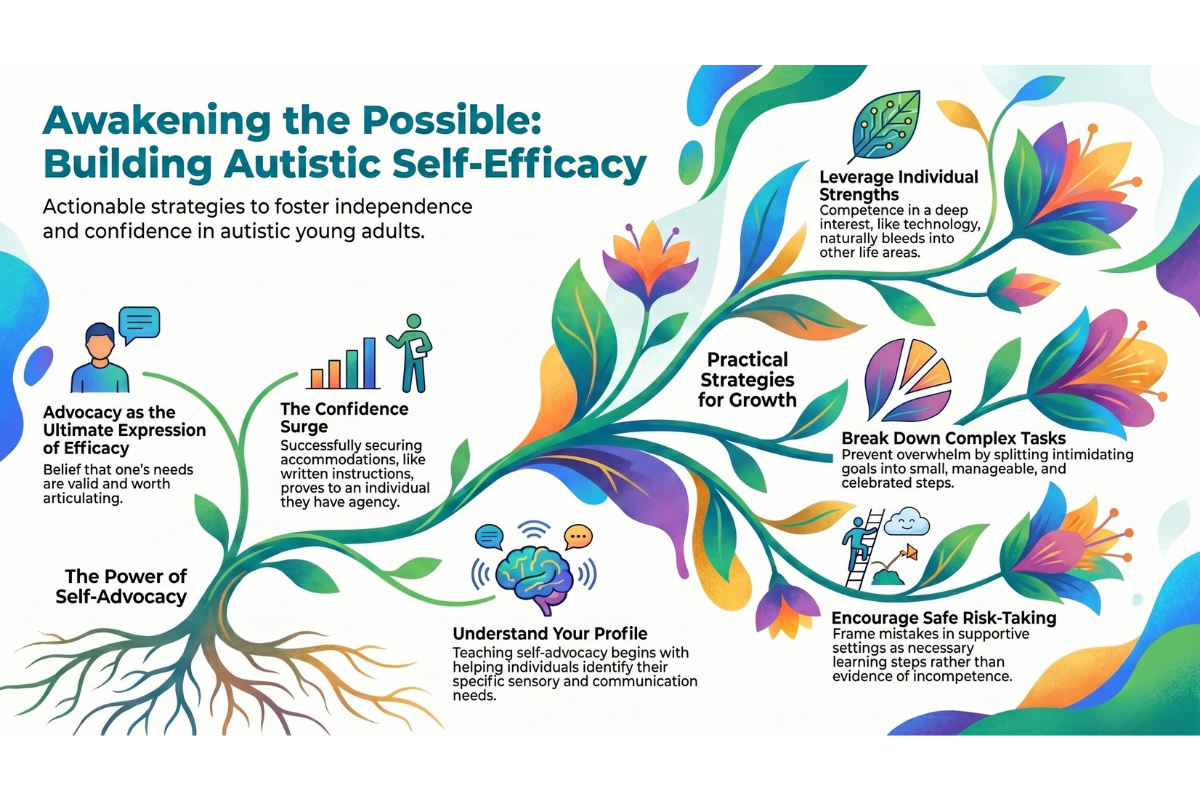
True independence requires the ability to advocate for oneself. Self-advocacy is the ultimate expression of self-efficacy; it is the belief that one’s needs are valid and that one has the right to ask for them to be met.
Teaching self-advocacy involves helping autistic young adults understand their own neurocognitive profiles, identify their specific needs (e.g., sensory accommodations, clear communication), and practice articulating those needs to others. This is a critical skill for navigating higher education, employment, and personal relationships. Among therapy providers, self-advocacy is recognized as one of the most important skills for autistic adults to develop for long-term quality of life.
When an individual successfully advocates for an accommodation, such as asking a supervisor for written instructions instead of verbal ones, and receives a positive response, their confidence surges. They learn that they have agency in shaping their environment and that they do not have to simply endure discomfort.
How Programs Create Confidence-Building Experiences
Effective transition programs do not just teach skills; they engineer environments where confidence can grow. They do this by providing a carefully calibrated balance of support and challenge.
Consider the story of Abbie, detailed in the Meristem 2025 Impact Report. When Abbie first moved into the residential dorms, unstructured time and everyday routines felt overwhelming. She would restart laundry cycles repeatedly without completing them and freeze in checkout lines due to anxiety.
A traditional compliance-based approach might have focused on forcing Abbie to finish the laundry or doing the shopping for her. Instead, the program provided consistent support, allowed her to experience the natural consequences of her actions in a safe environment, and encouraged persistence. Through this process, Abbie developed the self-regulation skills to manage her time and emotions independently. She now completes her laundry and confidently engages with cashiers. Her journey illustrates how the right environment supports not only practical independence but the inner confidence necessary to navigate real life with stability and dignity.
Practical Exercises for Families and Educators
Building confidence is a collaborative effort that extends beyond formal programs. Families and educators play a vital role in fostering self-efficacy in daily life.
- Identify and Leverage Strengths. Focus on what the individual does well. If they have a deep interest in technology, provide opportunities for them to use that skill to help others or solve problems. Competence in one area often bleeds into others.
- Break Down Complex Tasks. Overwhelm is the enemy of confidence. Break large, intimidating tasks (like applying for a job) into small, manageable steps (like updating a resume or practicing one interview question). Celebrate the completion of each step.
- Encourage Risk-Taking in Safe Environments. Allow the individual to try new things and experience failure in a supportive setting. Frame mistakes as necessary steps in the learning process, not as evidence of incompetence.
- Model Self-Compassion. Autistic young adults often mirror the attitudes of the adults around them. Model how to handle frustration and mistakes with grace and self-compassion.
Conclusion: Awakening the Possible
The journey from self-doubt to self-efficacy is not a quick fix. It requires patience, persistence, and a fundamental belief in the potential of the autistic individual. By prioritizing mastery experiences, embracing appropriate challenges, and fostering physical and emotional competence, we can help autistic young adults build the robust, enduring confidence they need to thrive.
We are not just teaching skills; we are awakening the possible. When an autistic young adult truly believes in their own capacity, there is no limit to what they can achieve.
Ready to take the next step? Explore our Social and Emotional Development pillar page to understand how confidence integrates with broader social growth.
Voices of Community Podcast
Join us for conversations with autistic adults, families, and professionals who are helping shape a more inclusive world. Each episode shares personal stories, insights, and perspectives from across the Meristem community and beyond.