A job interview across town. A weekly social group. A simple trip to the grocery store. For most people, these are routine parts of life. But for many autistic young adults, they represent a massive, often insurmountable, obstacle. Why? Because they all require transportation.
Transportation isn’t just about getting from point A to point B. It’s the gateway to everything else. It’s the key that unlocks employment, education, social connection, and true community participation. Without it, even the most capable individual remains isolated, dependent, and unable to fully step into their adult life. The link is undeniable; a 2024 study found that employed autistic adults were more than twice as likely to drive themselves as their unemployed peers (45% vs. 21%) [1].
But the path to autism transportation independence is riddled with challenges. It’s a journey that often begins with overwhelming anxiety and ends, for too many, in resignation. The good news? It doesn’t have to be that way. With the right strategies, tools, and a step-by-step approach, you can help your young adult move from fear to freedom.
This guide will break down the common barriers to transportation, provide a clear progression for building skills, and offer practical strategies for teaching everything from route planning to handling the unexpected. Let’s get moving.
Why Transportation is Such a Hurdle: The Four Big Barriers
To solve a problem, you first have to understand it. The transportation challenge for autistic adults isn’t about a lack of desire; it’s about a complex interplay of very real barriers. Research shows that these challenges are a primary concern for families and individuals alike.
Barrier 1: Sensory Overload
Imagine the sensory experience of a city bus. The screech of the brakes. The roar of the engine. The overwhelming smell of perfume, fast food, and wet coats. The visual chaos of ads, flashing lights, and a constantly changing landscape. The feeling of being pressed up against strangers. For an autistic individual with sensory sensitivities, this isn’t just unpleasant; it can be physically painful and completely dysregulating.
Barrier 2: Executive Function Demands
Catching a bus is a surprisingly complex executive function task. It requires:
- Planning: Which bus do I take? When does it arrive? What’s the backup plan?
- Sequencing: I need to get my pass, walk to the stop, wait, board, pay, find a seat, watch for my stop, signal, and exit. In that exact order.
- Time Management: If I miss the 9:05, will I be late? How long will the trip take?
- Cognitive Flexibility: The bus is detoured! What do I do now?
One study found that “difficulty with planning a public transportation trip” was one of the most significant barriers, reported by nearly 23% of unemployed autistic adults.
Barrier 3: Social Anxiety and Fear
Public spaces are filled with unwritten social rules. Where do I stand while waiting? Do I make eye contact with the driver? What if someone sits next to me and tries to talk? What if I have a meltdown in public? These anxieties are very real. In the same study, over 26% of unemployed autistic adults worried about how other passengers would treat them [1].
Barrier 4: Safety Concerns
Both parents and young adults harbor legitimate fears about safety. What if they get lost? What if they are targeted by bullies or criminals? What if they can’t communicate their needs in an emergency? These concerns often lead families to decide that the risk isn’t worth the reward, keeping the young adult at home and dependent.
Understanding these barriers is the first step. Now, let’s build a plan to dismantle them, one by one.

Ready to explore the possible? Contact us today to learn more.
The Path to Independence: A 4-Phase Progression
Like all complex skills, transportation independence is built in stages. You don’t go from being driven everywhere to navigating the city solo overnight. The key is gradual exposure and systematic skill-building.
Phase 1: Accompanied Rides (Building Familiarity)
What It Looks Like: You and your young adult ride public transportation together, but you handle everything. You plan the route, buy the tickets, and navigate. Their only job is to experience the sensory and social environment with you as a safety net.
Goal: Desensitization and basic familiarity. Help them get used to the sounds, smells, and feel of the bus or train. Talk about what’s happening. “See, that cord is what you pull to request a stop.”
Duration: 5-10 trips on various routes.
Phase 2: Shadowing (Transferring Responsibility)
What It Looks Like: Your young adult takes the lead, and you act as their “shadow.” They plan a simple, familiar route. They buy the tickets. They figure out where to stand and when to get off. You are there to provide prompts and support, but you don’t offer help unless they are truly stuck.
Goal: Skill acquisition. This is where they learn the practical steps of using the system. Use the “I do, we do, you do” model for each micro-skill (e.g., using the transit app, reading the schedule).
Duration: 10-15 trips on familiar routes.
Phase 3: Supervised Solo Trips (Building Confidence)
What It Looks Like: Your young adult completes a familiar trip on their own, but with a safety net. You might follow the bus in your car, or wait for them at the destination. You can use location-sharing apps on your phones for peace of mind.
Goal: Confidence and problem-solving. This is where they prove to themselves that they can do it. It’s also where they are most likely to encounter a small problem (e.g., the bus is a few minutes late) and have to solve it on their own.
Duration: 5-10 successful solo trips.
Phase 4: Full Independence (Mastery)
What It Looks Like: Your young adult can independently plan and execute trips to both familiar and new locations. They have strategies for handling unexpected problems and feel confident in their ability to navigate their community.
Goal: Generalization and autonomy. They are no longer just following a script; they understand the system and can adapt to new situations.
Duration: This is an ongoing, lifelong skill.
| Phase | Your Role | Young Adult’s Role | Key Goal |
|---|---|---|---|
| 1. Accompanied | Director: You do everything. | Observer: Experiences the environment. | Desensitization |
| 2. Shadowing | Collaborator: You prompt and support. | Learner: Takes the lead on tasks. | Skill Acquisition |
| 3. Supervised Solo | Safety Net: You follow or wait at the destination. | Problem-Solver: Completes trip alone. | Confidence Building |
| 4. Independent | Consultant: Available for questions on new routes. | Navigator: Plans and executes all trips. | Autonomy |
Teaching the Core Skills: A Practical Toolkit
Within this 4-phase progression, you need to explicitly teach the underlying skills. Here are the most critical ones and how to teach them.
Skill 1: Route Planning and Navigation
This is a major executive function challenge. Don’t assume it’s intuitive.
Use Technology: Teach them to use apps like Google Maps or a local transit app. These tools are a game-changer. Research has shown that individuals with developmental disabilities can be successfully taught to use map applications to navigate public transit.
Create Visual Aids: For a regular route (e.g., home to work), create a laminated card with step-by-step instructions, including bus numbers, stop names, and key landmarks.
Practice in “Sandbox Mode”: Plan a trip on Google Maps from the comfort of your living room. Use Street View to see what the bus stop and destination look like. This reduces anxiety by making the unfamiliar familiar.
Skill 2: Handling Unexpected Situations
This is where true independence is tested. You can’t prepare for every possibility, but you can teach a problem-solving framework.
- Role-Play Scenarios: What do you do if… the bus drives past your stop? You get on the wrong bus? You lose your bus pass? Act out these scenarios at home.
- Create a “Help Script”: Write down and have them practice a few key phrases they can use to ask for help. “Excuse me, can you tell me if this bus goes to City Hall?” or “I’m lost. Can you help me find the nearest bus stop?”
- Establish a Backup Plan: The most important tool is a fully charged cell phone. Teach them that the ultimate backup plan is to call you or another trusted adult for help. This reduces the fear of being stranded.
Skill 3: Safety and Stranger Awareness
Safety is paramount. Teach these skills explicitly and practice them repeatedly.
- The “Circle of Trust”: Define who is safe to ask for help (a police officer, a bus driver, a store clerk) versus who not to engage with.
- Situational Awareness: Teach them to pay attention to their surroundings, not be buried in their phone. Practice a game of “I Spy” on the bus to build this skill.
- Personal Information: Drill them on never giving out their name, address, or phone number to strangers.
- Trust Your Gut: Teach them that if a person or situation feels wrong, they should leave immediately. They don’t need to be polite; they need to be safe.
Learn About the Meristem Method→
The Role of Travel Training Programs
For many families, teaching transportation skills is too overwhelming to do alone. This is where professional travel training comes in. These programs, often offered by transit agencies or disability service organizations, provide one-on-one instruction from a trained professional.
Travel training is a highly effective, evidence-based practice that can dramatically improve independence and community participation. A travel trainer will work with your young adult through the same 4-phase progression, providing expert guidance and support.
At Meristem, travel training is a core component of our Self-Leadership program. We don’t just teach it in theory; our students practice it every day. They learn to navigate the local bus system to get to their internships, social outings, and appointments. This real-world, immersive practice is what builds true, lasting confidence.
A Holistic Approach to Transportation Independence
Mastering transportation is about more than just reading a bus schedule—it’s a complex skill that involves practical abilities, emotional regulation, social skills, and problem-solving. At Meristem, we tackle this challenge through our holistic Meristem Method, which addresses:
- Life Skills & Social Skills: We provide hands-on travel training in real-world settings, from route planning and fare payment to asking for directions and interacting appropriately with transit staff and fellow passengers.
- Therapeutic Movement: Public transportation can be sensory-overwhelming and anxiety-inducing. We teach mindfulness and self-regulation techniques that help students manage these challenges.
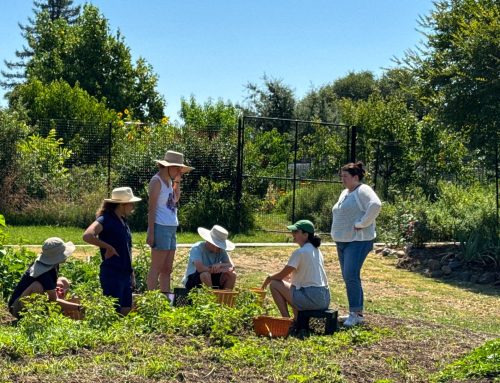
- Land & Nature Immersion: Our campus provides a low-stimulation environment where students can build confidence before navigating the more chaotic environment of public transit.
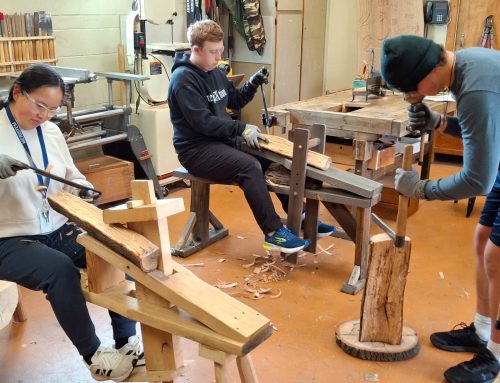
- Craft & Resistance Training: Transportation requires persistence and problem-solving, especially when things go wrong. Craft work builds these capacities in a safe, supportive setting.
- Self-Leadership & Executive Functioning: We teach students to plan routes, manage time, make decisions when faced with delays or changes, and apply problem-solving skills in real-time—the true markers of transportation independence.
This multi-faceted approach builds true confidence and competence, ensuring that transportation skills are reliable and sustainable. Learn more about our real-world learning approach.
Your Next Steps
Building autism transportation independence is a journey, but it’s a journey you can start today.
- Assess the Barriers: Which of the four big barriers is the biggest hurdle for your young adult? Start there.
- Start Small: Pick one short, simple, low-stakes trip to practice. A ride to the library or a nearby park.
- Use the Tools: Download a transit app and explore it together. Create a visual checklist for the chosen route.
- Begin Phase 1: Take that first trip together. Make it fun. The only goal is a positive experience.
Remember, every trip, no matter how small, is a step toward a bigger life. It’s a step toward employment, friendship, and the future your young adult deserves.
For a broader look at how transportation fits into the overall picture of independence, read our comprehensive Complete Guide to Independence for Autistic Young Adults.
Key Takeaways
- Transportation is the gateway to independence. It unlocks jobs, social life, and community access.
- The main barriers are sensory, executive function, anxiety, and safety. Address these directly.
- Use a 4-phase progression: Accompanied → Shadowing → Supervised Solo → Independent.
- Teach the underlying skills: Route planning, problem-solving, and safety are just as important as knowing the bus number.
- Professional travel training works. Consider seeking expert help to accelerate progress.
- Start small, build confidence, and celebrate every win.
Voices of Community Podcast
Join us for conversations with autistic adults, families, and professionals who are helping shape a more inclusive world. Each episode shares personal stories, insights, and perspectives from across the Meristem community and beyond.