For families of autistic young adults, the transition from adolescence to adulthood brings a mix of hope and apprehension. You have watched your child navigate a world not always designed for them, and now, as they stand on the precipice of adulthood, the ultimate goal comes into sharp focus: a life of independence, purpose, and fulfillment. But what does autism independence truly mean? And how can you, as a parent or caregiver, provide the right support to help your young adult achieve it?
At Meristem, we believe that independence is not a destination but a journey—a process of building skills, confidence, and self-awareness, one experience at a time. It is not about severing ties but about empowering young adults to navigate the world on their own terms, with the right support systems in place. This guide will walk you through the essential domains of independence, the common barriers autistic young adults face, and the proven strategies that can help them build a life of their own.
What Independence Means for Autistic Adults: A Spectrum of Autonomy
Independence is not a one-size-fits-all concept. For one autistic young adult, it might mean living in their own apartment, managing a full-time job, and maintaining a vibrant social life. For another, it might mean living in a supported community, working part-time with a job coach, and enjoying a few close friendships. Both are valid and meaningful forms of independence.
It is crucial to move beyond a neurotypical definition of independence and embrace a spectrum of autonomy. The goal is not to force conformity to a preconceived notion of adulthood but to empower each individual to achieve the greatest degree of self-determination possible. This means focusing on their strengths, respecting their support needs, and celebrating every step forward, no matter how small.
Recent research highlights the significant challenges autistic adults face in achieving traditional markers of independence. According to Autism Speaks, learning life skills is essential to increase independence at home, at school, and in the community. A 2023 study found that only 5% of autistic adults were living independently, with 37% requiring overnight care. This stark reality underscores the urgent need for effective, individualized support systems that go beyond traditional academic education.
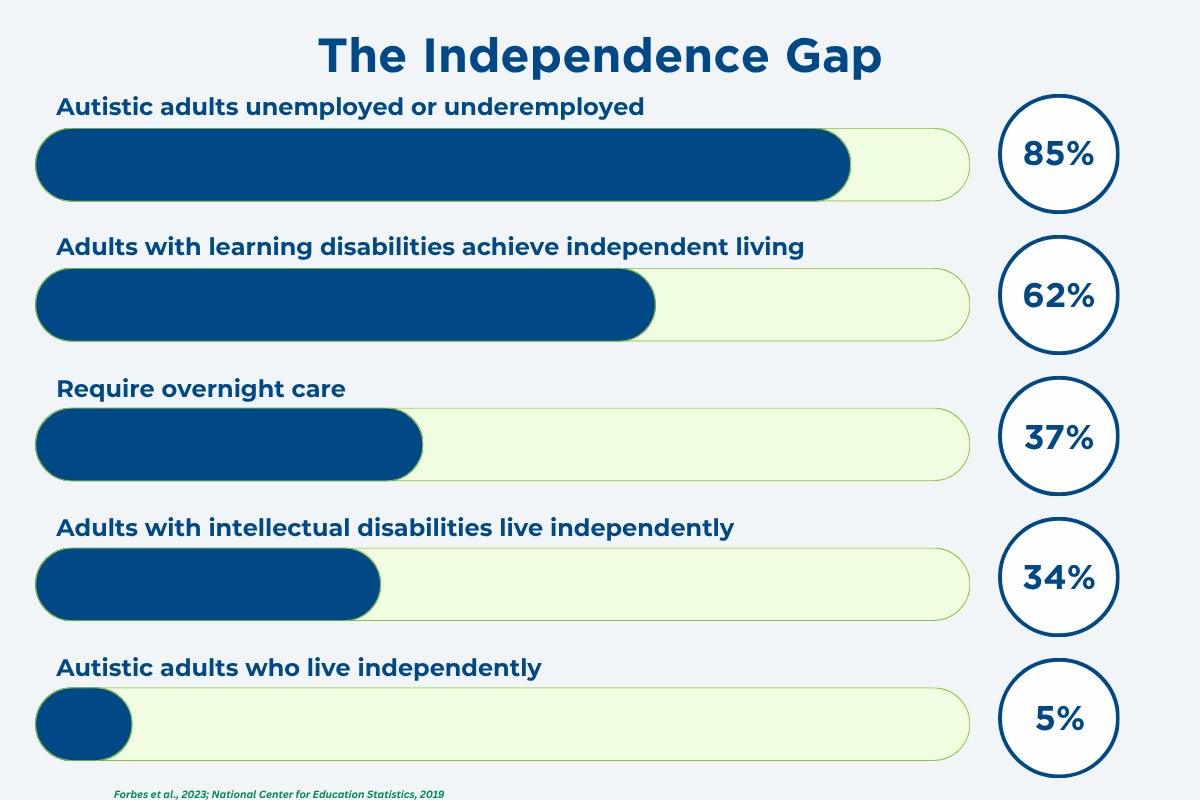
Source: Forbes et al., 2023; National Center for Education Statistics, 2019
These statistics are not a reflection of the potential of autistic individuals but a failure of the systems designed to support them. At Meristem, we are committed to closing this gap. Our programs are built on the belief that with the right approach, every young adult can build a life of greater independence and self-sufficiency.
The Five Domains of Independence
To build a comprehensive roadmap to independence, it is helpful to break it down into five interconnected domains. These are the pillars upon which a self-sufficient life is built. Each domain requires a unique set of skills, but they all work together to create a holistic foundation for autonomy.
- Personal Care. Hygiene routines, grooming, dressing, medication management, sleep hygiene, nutrition. (Maintaining a consistent daily hygiene routine without prompting)
- Household Management. Cooking, cleaning, laundry, home maintenance, organization, shopping. (Planning and preparing a week’s worth of meals)
- Financial Literacy. Budgeting, banking, paying bills, understanding credit, avoiding scams, long-term financial planning. (Creating and sticking to a monthly budget)
- Transportation. Using public transit, ride-sharing services, obtaining a driver’s license, planning routes, pedestrian safety. (Independently navigating the bus system to get to work or a social event)
- Healthcare Advocacy. Scheduling appointments, communicating with doctors, understanding insurance, refilling prescriptions. (Calling to schedule a doctor’s appointment and describing symptoms clearly)
These domains are not a checklist to be completed but a framework for lifelong learning. Mastery in one area often supports growth in another. For example, mastering transportation skills opens up opportunities for employment and social engagement, which in turn builds confidence and self-esteem.
Developmental Readiness vs. Chronological Age
One of the most common misconceptions about independence is that it is tied to chronological age. We expect 18-year-olds to be on the path to leaving home, and 25-year-olds to be fully self-sufficient. For autistic individuals, however, developmental readiness is a far more important metric than age.
Many autistic young adults experience a gap between their chronological age and their development of the executive function and adaptive skills needed for independence. As noted by SPARK for Autism, autistic children begin to fall behind their peers in daily living skills as early as preschool, and this gap widens over time if not addressed with targeted support. This is not a deficit but a difference in developmental trajectory.
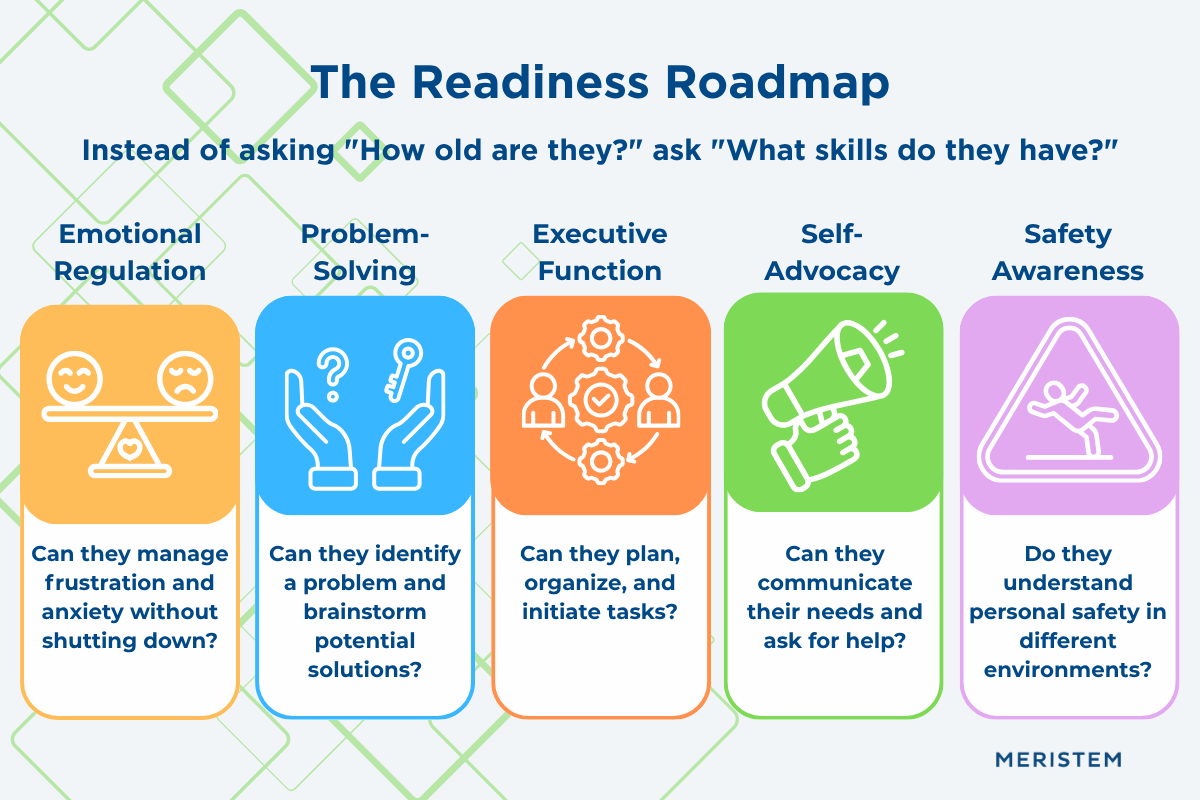
Focusing on developmental readiness allows for a more compassionate and effective approach. It removes the pressure of arbitrary timelines and instead focuses on building the foundational skills needed for the next step, whatever that may be. At Meristem, we meet each young adult where they are, creating an individualized plan that respects their unique pace of development.
Common Barriers to Independence and How to Overcome Them
Understanding the common barriers to autism independence is the first step in creating effective solutions. These challenges are not insurmountable, but they do require a different approach than what might work for neurotypical individuals.
Executive Function Deficits
The Challenge: Difficulty with planning, organizing, initiating tasks, time management, and flexible thinking. This can make multi-step tasks like cooking or laundry feel overwhelming. As SPARK for Autism explains, executive functioning issues may explain why some teens struggle to complete a task by themselves even when they know how to do it.
The Solution: Use experiential learning and scaffolding. Break down tasks into small, manageable steps using visual checklists. Practice skills in real-world settings with decreasing support. Use the “I do, we do, you do” model to build competence and confidence.
Sensory Sensitivities
The Challenge: Over- or under-sensitivity to sights, sounds, textures, and smells can make everyday environments like grocery stores or public transit unbearable.
The Solution: Teach self-regulation techniques such as deep pressure, noise-canceling headphones, and sensory breaks. Gradually introduce new environments with a clear exit strategy. Allow choice in products (e.g., unscented soaps) to reduce sensory triggers.
Social Communication Challenges
The Challenge: Difficulty understanding social cues, body language, and unwritten social rules can lead to isolation and difficulty navigating community settings.
The Solution: Provide direct instruction and role-playing. Explicitly teach social skills in a structured way. Use video modeling to practice real-world scenarios. Focus on building genuine connections around shared interests, rather than forcing neurotypical social norms.
Anxiety and Mental Health
The Challenge: High rates of anxiety and depression can make it difficult to try new things, cope with setbacks, and engage with the community.
The Solution: Integrate therapeutic support with life skills training. Teach coping mechanisms and emotional regulation strategies. Use a strengths-based approach to build self-esteem and resilience.
Overcoming these barriers requires a patient, persistent, and personalized approach. It is not about eliminating challenges but about building the skills and strategies to navigate them successfully.
The Meristem Approach: Experiential Learning in a Natural Setting
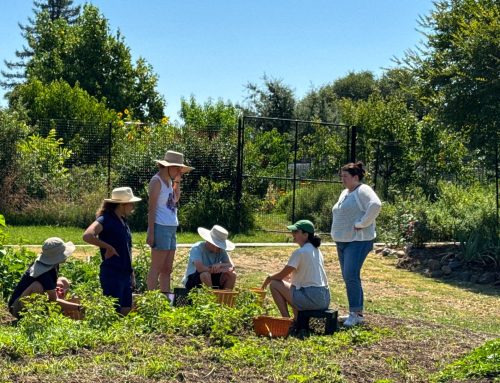
At Meristem, we have developed a unique and effective approach to building autism independence that addresses the whole person. We believe that true learning happens not in a classroom but through direct, hands-on experience in a supportive and natural environment. Our 13-acre campus provides a rich and varied setting for young adults to practice life skills in a real-world context.
Our approach is built on three core principles:
- Experiential Learning: We don’t just talk about life skills; we practice them every day. Our students learn to cook in a real kitchen, care for animals on our farm, and manage their time in a residential setting. This hands-on approach builds practical competence and deep, lasting confidence.
- The Power of Nature: Nature is a powerful teacher. The changing seasons, the cycles of growth and decay, and the responsibility of caring for living things provide a rich and grounding context for learning. The natural world is a low-stimulation environment that calms the nervous system and allows for focused engagement.
- Integrated Support: Our team of educators, therapists, and residential staff work together to provide seamless support across all aspects of a student’s life. We integrate mental health support, social skills training, and life skills instruction into a holistic program that addresses the needs of the whole person.
The Meristem Difference
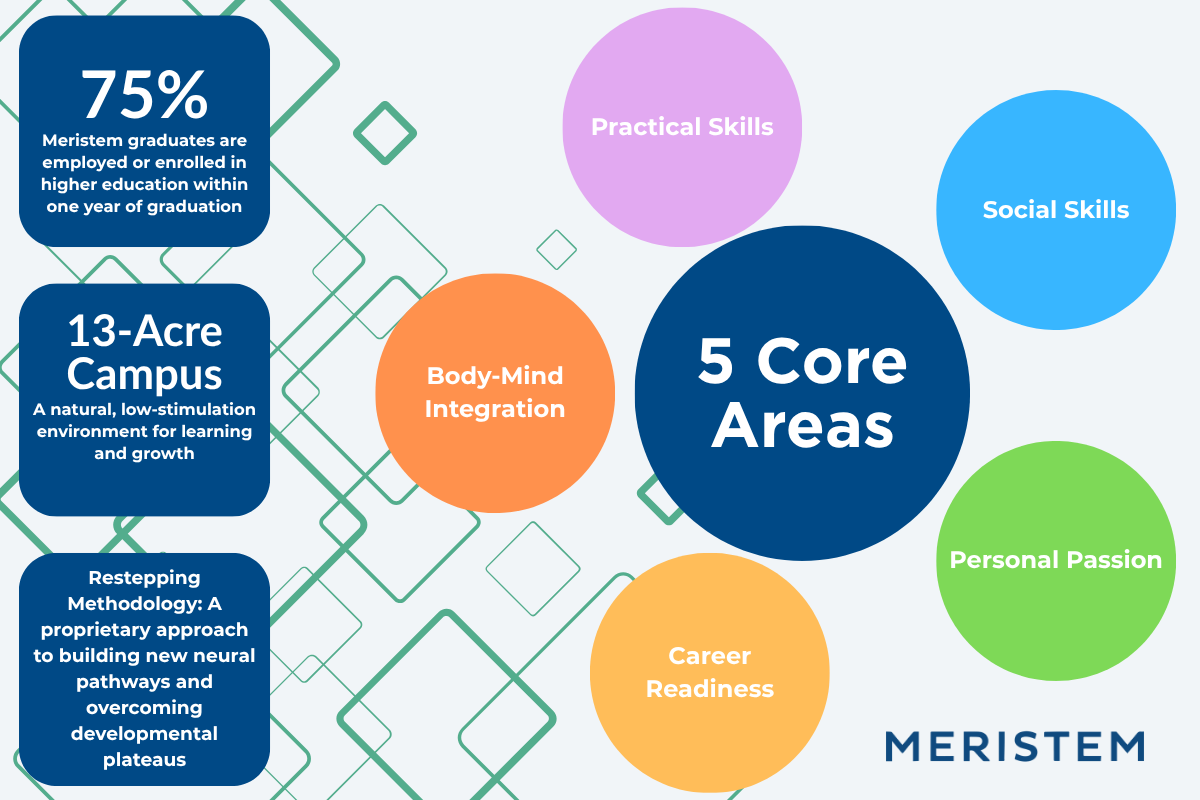
Our success speaks for itself. While the national unemployment rate for autistic adults is a staggering 85%, 75% of our graduates are employed or pursuing higher education within a year of leaving our program. This is the power of an approach that honors the individual, embraces experiential learning, and understands the unique developmental needs of autistic young adults.
Learn About the Meristem Method→
Practical Strategies for Building Independence at Home
Building independence is a collaborative effort that begins at home. As a parent or caregiver, you can play a crucial role in laying the foundation for your young adult’s future autonomy. Here are some practical strategies you can implement at home, inspired by the principles we use at Meristem.
1. Start with Strengths
Every individual has unique strengths and interests. Instead of focusing on deficits, start with what your young adult is good at and enjoys. If they love video games, use that as a context for learning. Can they research and budget for a new game? Can they follow a multi-step process to build a new computer?
2. Use Visual Supports
As highlighted by Autism Speaks, visual supports are a powerful tool for autistic individuals. Use checklists, visual schedules, and task analysis charts to break down complex tasks into manageable steps. This reduces cognitive load and provides a clear roadmap for completion.
Example: Morning Routine Checklist
- Wake up at 7:00 AM
- Take a shower
- Get dressed
- Eat breakfast
- Brush teeth
- Pack bag for the day
- Leave for work/school by 8:00 AM
3. Embrace Natural Consequences
It can be tempting to rescue your young adult from every mistake, but natural consequences are powerful teachers. If they forget their lunch, they will be hungry. If they don’t do their laundry, they will run out of clean clothes. These experiences, while uncomfortable, are often more effective than lectures or reminders.
4. Teach Financial Literacy Early
Financial independence is a cornerstone of autonomy. Start with the basics: opening a bank account, creating a budget, and tracking expenses. As their skills grow, introduce more complex concepts like credit, savings, and investing. Use real-world scenarios, like planning and budgeting for a vacation, to make learning meaningful.
5. Foster Self-Advocacy
One of the most important skills you can teach your young adult is how to advocate for their own needs. This includes everything from asking for help to disclosing their diagnosis in an appropriate setting. Role-play different scenarios and provide them with the language they need to communicate their needs effectively.
The Role of Community and Environment
No one achieves independence in a vacuum. A supportive community and an accommodating environment are essential for success. This includes not only family and friends but also employers, service providers, and the broader community.
Finding the Right Residential Setting
For many autistic young adults, the transition to independent living is a gradual process. There are a variety of residential options to consider, each offering a different level of support:
- Living at Home: The most supportive environment, but can sometimes hinder the development of independence.
- Supported Living: Living in an apartment or group home with on-site staff to assist with daily tasks.
- Independent Living: Living alone or with a roommate, with minimal outside support.
Building a Social Network
Social connection is a fundamental human need. For autistic young adults, building and maintaining friendships can be challenging. Encourage them to pursue their interests in a social context, whether it’s a gaming club, a hiking group, or a volunteer organization. Shared interests are the foundation of genuine connection.
Creating an Inclusive Workplace
With an 85% unemployment rate, finding and keeping a job is one of the biggest challenges for autistic adults. Employers play a crucial role in creating inclusive workplaces that value neurodiversity. This includes providing clear job descriptions, offering accommodations like flexible schedules and sensory-friendly workspaces, and fostering a culture of acceptance and respect.
Understanding Executive Function: The Hidden Key to Independence
When we talk about autism independence, we cannot overlook the critical role of executive function. Executive function is the set of mental skills that help us plan, organize, remember instructions, and manage multiple tasks. For autistic individuals, executive function challenges are often one of the most significant barriers to independence, yet they are also one of the most misunderstood.
Executive function is not a single skill but a collection of interconnected abilities that work together to help us navigate daily life. These include working memory (holding information in mind while using it), cognitive flexibility (adapting to new situations), and inhibitory control (resisting impulses and staying focused). When these skills are compromised, even simple tasks can become overwhelming.
Consider the seemingly straightforward task of doing laundry. It requires you to remember to collect dirty clothes, sort them by color, add detergent, set the correct cycle, transfer them to the dryer, and finally fold and put them away. Each step requires planning, sequencing, and memory. If you get distracted or forget a step, the clothes might sit in the washer for days. This is a common experience for autistic young adults with executive function challenges.
The good news is that executive function skills can be taught and strengthened. The key is to provide external supports that compensate for internal challenges. Visual schedules, timers, checklists, and routines all serve as “external executive functions” that help individuals stay on track. Over time, with consistent practice and support, these external tools can become internalized, and the individual can begin to manage tasks more independently.
At Meristem, we integrate executive function training into every aspect of our program. We don’t just teach students what to do; we teach them how to plan, organize, and execute tasks independently. This meta-cognitive approach is what sets our program apart and leads to lasting, meaningful change.
The Transition from School to Adulthood: A Critical Window
The transition from high school to adulthood is a critical window for building independence. For neurotypical young adults, this transition is supported by a range of institutional structures: college, vocational training, entry-level jobs, and social networks. For autistic young adults, these structures are often inaccessible or poorly suited to their needs.
The Individuals with Disabilities Education Act (IDEA) guarantees educational services until age 21, but after that, support often drops off dramatically. Many families find themselves in a “services cliff,” where the structured support of school gives way to a fragmented and confusing landscape of adult services. This is precisely the moment when young adults need the most support, yet it is often when they receive the least.
This transition period is not just about practical skills but also about identity formation. Who am I as an adult? What are my strengths and passions? How do I want to contribute to the world? These are profound questions that every young adult must grapple with, and autistic young adults are no exception. In fact, for many, these questions are even more complex because they are navigating not only the transition to adulthood but also the process of understanding and accepting their neurodivergent identity.
Meristem was founded specifically to address this critical gap. Our programs are designed for young adults aged 18-26, the exact demographic that is most underserved by traditional systems. We provide a bridge between the structured support of school and the autonomy of adult life, giving students the time and space they need to develop the skills and confidence for true independence.
The Financial Reality: Planning for a Lifetime of Support
One of the most daunting aspects of planning for autism independence is the financial reality. The lifetime cost of raising an autistic child is estimated to be between $2.4 and $3.2 million, with families facing costs that are ten times higher than those raising neurotypical children. These costs include not only direct therapeutic support, which can exceed $100,000 per year, but also lost income from reduced work hours and the need for specialized care.
For many families, the question is not whether their young adult will need financial support but how to provide it sustainably over a lifetime. This requires careful planning, including:
- Government Benefits: Understanding and accessing Social Security Disability Insurance (SSDI), Supplemental Security Income (SSI), and Medicaid.
- Special Needs Trusts: Setting up a trust that can provide financial support without jeopardizing eligibility for government benefits.
- ABLE Accounts: Tax-advantaged savings accounts for individuals with disabilities.
- Long-Term Care Planning: Planning for residential support, healthcare, and quality of life expenses.
Financial planning is not just about money; it is about peace of mind. Knowing that your young adult will have the resources they need to live a dignified and fulfilling life, even after you are gone, is one of the greatest gifts you can give them.
At Meristem, we understand the financial burden that families face. We work with families to explore funding options, including private pay, scholarships, and state vocational rehabilitation programs. Our goal is to make our programs accessible to all families who can benefit from them.
The Importance of Self-Determination and Choice
True independence is not just about being able to do things for yourself; it is about having the freedom to make choices about your own life. Self-determination—the ability to make decisions, set goals, and direct your own life—is a fundamental human right, yet it is often denied to autistic individuals.
Too often, well-meaning parents, educators, and service providers make decisions for autistic individuals without consulting them. This can lead to a learned helplessness, where the individual comes to believe that they have no control over their own life. The antidote to this is to actively foster self-determination from an early age.
This means:
- Offering Choices: Even small choices, like what to wear or what to eat for breakfast, build the habit of decision-making.
- Respecting Preferences: Honoring an individual’s preferences, even when they differ from your own, communicates that their voice matters.
- Involving Them in Planning: Including the individual in discussions about their education, living situation, and future goals ensures that the plan reflects their values and aspirations.
- Teaching Self-Advocacy: Providing the language and skills to communicate their needs and advocate for their rights.
At Meristem, self-determination is at the heart of everything we do. We believe that our students are the experts on their own lives. Our role is not to tell them what to do but to provide the tools, support, and opportunities they need to discover their own path.
Addressing Co-Occurring Mental Health Challenges
Autistic individuals experience significantly higher rates of anxiety, depression, and other mental health challenges compared to the general population. Studies suggest that up to 70% of autistic adults experience at least one co-occurring mental health condition. These challenges can be a major barrier to independence, affecting everything from social engagement to employment to daily functioning.
The relationship between autism and mental health is complex. Some mental health challenges are a direct result of the neurobiological differences associated with autism. Others are a response to the stress of living in a world that is not designed for neurodivergent individuals. The constant effort to mask autistic traits, navigate social situations, and cope with sensory overload can lead to burnout, anxiety, and depression.
Addressing mental health is not separate from building independence; it is an integral part of it. An individual who is struggling with severe anxiety or depression will not be able to focus on learning new skills or taking on new challenges. This is why Meristem integrates mental health support into our programs. We have licensed therapists on staff who provide individual and group therapy, and we teach coping skills and emotional regulation strategies as part of our daily curriculum.
We also recognize the importance of creating a low-stress, supportive environment. Our nature-based campus provides a calming and grounding setting that reduces sensory overload and promotes emotional well-being. We believe that mental health is not just the absence of illness but the presence of wellness, and we work to cultivate a culture of acceptance, connection, and joy.
The Power of Peer Connection and Community
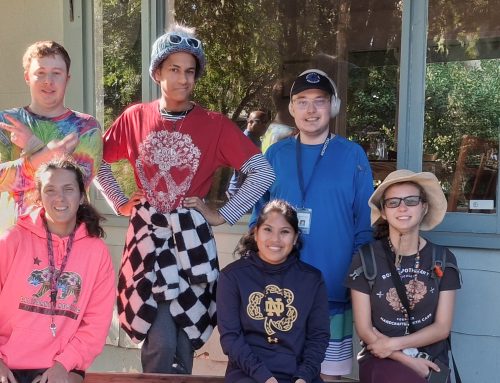
One of the most transformative aspects of the Meristem experience is the sense of community and belonging that our students find here. For many autistic young adults, this is the first time they have been surrounded by peers who truly understand them. The relief and joy of being able to be yourself, without judgment or the need to mask, is profound.
Peer connection is not just about feeling good; it is a critical component of independence. Through peer relationships, young adults learn social skills, practice communication, and develop a sense of identity. They see models of what is possible and are inspired by the successes of their peers. They also learn that they are not alone in their struggles and that asking for help is a sign of strength, not weakness.
At Meristem, we intentionally cultivate a culture of peer support. Our students live together, work together, and learn together. They share meals, participate in group projects, and support each other through challenges. This sense of community is one of the most powerful aspects of our program and one that many of our graduates cite as life-changing.
Measuring Success and Celebrating Milestones
Success in the journey to independence is not a straight line. There will be progress and setbacks, triumphs and challenges. It is essential to measure success not by external standards but by individual growth and progress.
Celebrate every milestone, no matter how small. Did your young adult cook a meal for the first time? Did they navigate a new bus route on their own? Did they successfully advocate for an accommodation at work? These are all significant victories that deserve to be acknowledged and celebrated.
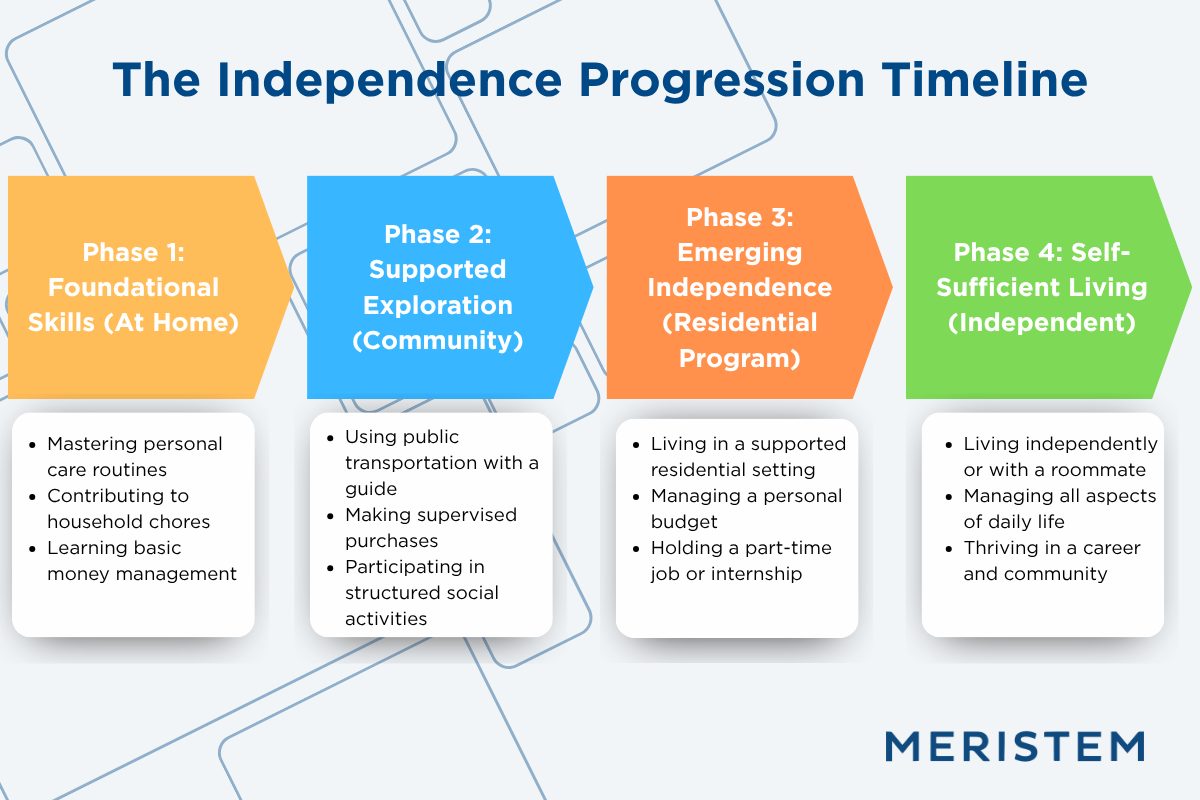
This timeline is not a rigid prescription but a general guide. Every individual will move through these phases at their own pace. The key is to provide the right level of support at each stage, gradually fading as skills and confidence grow.
The Meristem Method: A Proven Framework for Independence
Achieving independence is a complex journey that requires more than just a checklist of skills. It requires a holistic approach that develops the whole person across multiple interconnected domains. At Meristem, we’ve spent decades refining our approach into the Meristem Method, a comprehensive framework built on five core areas of development:
- Life Skills & Social Skills: This is the foundation of daily living and community participation. We move beyond theory to hands-on practice in real-world settings, teaching everything from navigating public transportation and understanding health insurance to recognizing safe and unsafe situations, advocating for oneself, and accessing community resources. Social skills are not taught in isolation but integrated into every aspect of daily life.
- Therapeutic Movement: We recognize the profound connection between physical movement and emotional regulation. Through integrated movement practices including bowling, aerial arts, theater arts, archery, and mindfulness, students learn to integrate primitive reflexes, understand how their body and emotions are connected, and build practical regulation tools they can use throughout their lives.
- Land & Nature Immersion: Our 13-acre campus is not just beautiful—it’s therapeutic. Through garden work, animal husbandry, herbal garden care, and landscaping, students redevelop sensory filters that may have been overwhelmed in traditional settings. They learn to regulate emotions through nature connection and build resilience through meaningful outdoor work that produces tangible results.
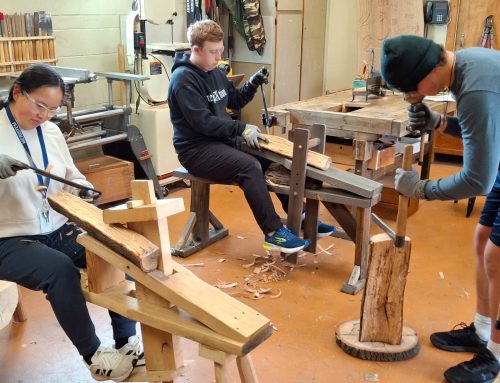
- Craft & Resistance Training: Working with metals, ceramics, woodworking, bushcraft, art, textiles, and herbal arts teaches more than just technical skills. It teaches persistence, problem-solving, and the ability to work through challenges and frustration. These skills transfer directly to social situations and workplace environments, where the ability to persist through difficulty is essential.
- Self-Leadership & Executive Functioning: Independence ultimately requires the ability to plan, organize, set goals, manage time, make decisions, and apply learned skills in new contexts. Through our Social Enterprise Internships, Class Teacher Assistants program, and Ambassador Program, students develop the executive functioning and leadership skills that transform learned abilities into real-world competence.
By weaving these five domains together through experiential, nature-based learning, the Meristem Method doesn’t just teach independence—it builds the confidence, competence, and self-awareness needed to sustain it. Learn more about our unique approach.
Looking Forward: A Vision for an Independent Future
As we look to the future, we envision a world where every autistic young adult has the opportunity to live a life of independence, purpose, and fulfillment. This vision requires a shift in how we think about autism and independence. It requires moving beyond a deficit-based model that focuses on what autistic individuals cannot do and embracing a strengths-based model that celebrates what they can do.
It requires creating systems and structures that are designed with neurodiversity in mind. This includes schools that teach life skills alongside academics, workplaces that value different ways of thinking and working, and communities that are inclusive and welcoming.
Most importantly, it requires believing in the potential of every autistic individual. At Meristem, we have seen firsthand what is possible when young adults are given the right support, in the right environment, at the right time. We have watched students who were told they would never live independently move into their own apartments. We have celebrated with graduates who landed their dream jobs. We have witnessed the transformation that happens when someone discovers their own strength and agency.
This is the future we are building, one young adult at a time. And we invite you to join us on this journey.
Frequently Asked Questions About Autism Independence
At what age should we start working on independence skills?
The earlier, the better. Even young children can begin learning foundational skills like self-care routines and contributing to household chores. The key is to start with age-appropriate tasks and gradually increase complexity as skills develop. Remember, “adulthood begins in preschool”—the habits and skills learned early create the foundation for later independence.
What if my young adult has significant support needs? Is independence still possible?
Absolutely. Independence exists on a spectrum. For some, it may mean living in a supported community with 24/7 staff assistance. For others, it may mean living alone with occasional check-ins. The goal is not to achieve a neurotypical standard of independence but to maximize self-determination and autonomy within the individual’s capabilities.
How do I balance providing support with fostering independence?
This is one of the most challenging aspects of parenting an autistic young adult. The key is to provide the minimum amount of support necessary for success, gradually fading support as skills develop. Think of it as scaffolding: you provide structure and support while the building is being constructed, but eventually, the scaffolding comes down and the building stands on its own.
What role does employment play in independence?
Employment is a critical component of independence for many individuals. It provides not only financial independence but also a sense of purpose, structure, and social connection. However, it is important to find the right fit. A job that is aligned with an individual’s strengths and interests is far more likely to be successful than one that is not.
How can I find the right residential program for my young adult?
Look for programs that offer individualized support, experiential learning opportunities, and a focus on building real-world skills. Visit the campus, talk to staff and current students, and ask about outcomes. What percentage of graduates are employed or in higher education? What kind of ongoing support is provided after graduation? At Meristem, we are proud of our 75% employment/education rate and our commitment to lifelong support for our graduates.
Take the Next Step Toward Independence
Building autism independence is a journey that requires the right support, the right environment, and the right approach. At Meristem, we have spent over a decade refining our programs to provide exactly that. Our holistic, experiential model has helped hundreds of young adults build the skills, confidence, and resilience they need to thrive.
If you are ready to explore what Meristem can offer your young adult, we invite you to take the next step:
Schedule a Campus Tour: See our 13-acre nature-based campus and meet our team.
Download Our Program Guide: Learn more about our curriculum, approach, and outcomes.
Speak with an Admissions Counselor: Discuss your young adult’s unique needs and how Meristem can help.
The journey to independence begins with a single step. Let us walk alongside you.
Voices of Community Podcast
Join us for conversations with autistic adults, families, and professionals who are helping shape a more inclusive world. Each episode shares personal stories, insights, and perspectives from across the Meristem community and beyond.