Key Takeaways: Exploring the Path to Adulthood
The end of high school marks a critical turning point for autistic young adults. The structured support of the Individuals with Disabilities Education Act (IDEA) falls away, leaving many families wondering what comes next. This guide explores the diverse landscape of autism after high school, from college and vocational training to supported employment and independent living programs. Understanding these pathways is the first step toward building a fulfilling and independent adult life. The key is to start early, plan collaboratively, and focus on the individual’s unique strengths and goals.
The End of IDEA Services: What Changes at Age 22
For many families of autistic individuals, the 22nd birthday is a date marked with anxiety. It is often called the “services cliff.” This is the moment when entitlement to special education services under the federal Individuals with Disabilities Education Act (IDEA) officially ends. The structured, predictable world of the public school system, with its IEPs, therapies, and dedicated support staff, disappears. Suddenly, the responsibility for finding, funding, and coordinating services shifts entirely to the individual and their family.
This transition can be jarring. The familiar rhythm of the school day is gone. The network of teachers and therapists who have known your child for years is no longer a daily presence. The legal mandate for a “free and appropriate public education” is replaced by a complex and often fragmented system of adult services. This new system is not an entitlement. It is a system of eligibility. You are no longer guaranteed services; you must qualify for them. This requires a new level of advocacy, paperwork, and persistence.
Option 1: College or Higher Education (with Supports)
For many autistic young adults, college is a viable and exciting option. The key to success is finding the right school with the right supports. The academic rigor of college can be a great fit for students with strong intellectual abilities. However, the social and executive functioning demands of college life can be a significant challenge. This is where a college’s disability support services become critical.
When exploring college options, look beyond the academic programs. Investigate the office of disability services. What specific supports do they offer for autistic students? These might include:
- Academic accommodations: Extended time on tests, note-takers, preferential seating.
- Executive functioning support: Coaching on time management, organization, and planning.
- Social skills support: Peer mentoring programs, social skills groups, and dedicated social events.
- Housing support: Single rooms, quiet dorms, and resident advisors trained in supporting neurodiverse students.
Many colleges now have dedicated programs for autistic students. These programs often provide a higher level of support than the standard disability services office. They may include dedicated staff, a physical space for students to gather, and a curriculum focused on the specific challenges autistic students face in college. These programs can be a powerful bridge to a successful college experience. For more information on navigating the transition to college, check out the resources available from organizations like the Autism Society.
| College Support Level | What it Looks Like | Best For |
|---|---|---|
| Standard Disability Services | Basic accommodations like extended time on tests. | Students who are highly independent and need minimal support. |
| Enhanced Disability Services | Adds executive functioning coaching and some social support. | Students who need some help with organization and social navigation. |
| Dedicated Autism Support Program | Comprehensive, wrap-around services with dedicated staff. | Students who need significant support in all areas of college life. |
Option 2: Vocational Training Programs
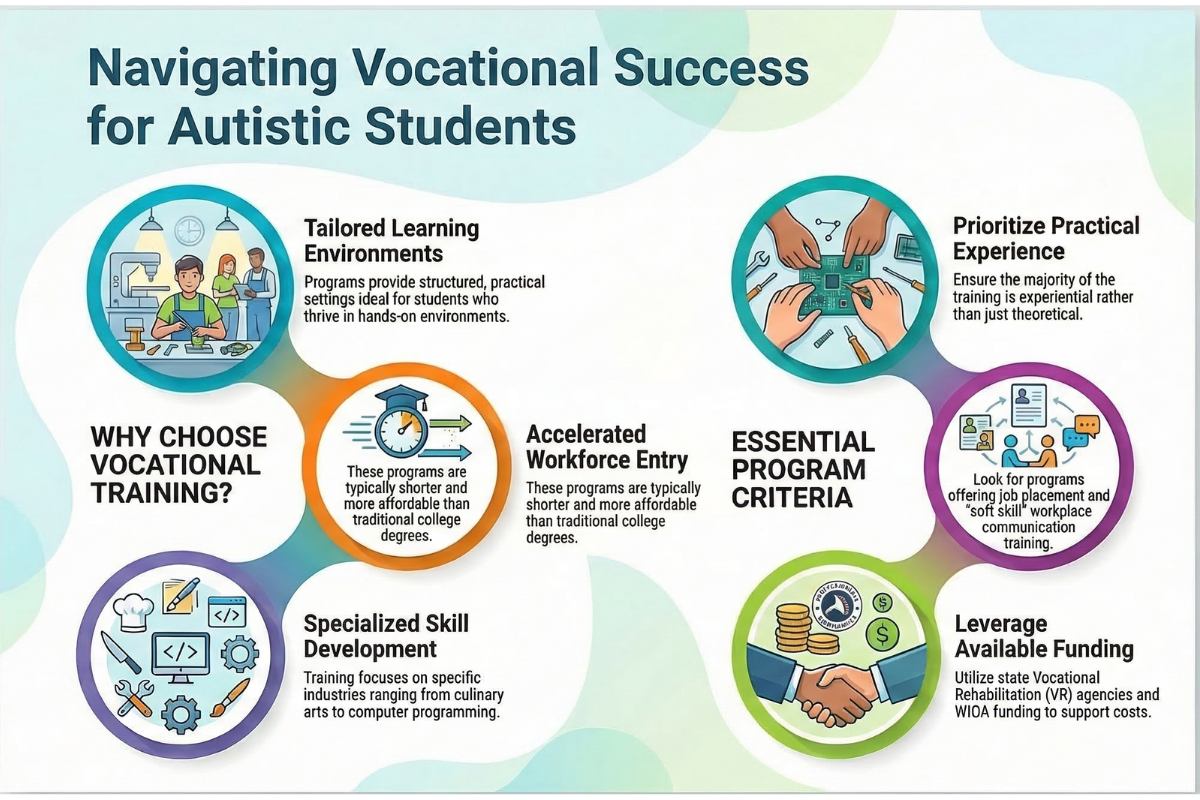
Not every path to a successful career runs through a four-year college. Vocational training programs offer a direct, hands-on route to employment in a specific trade or industry. These programs can be an excellent fit for autistic young adults who thrive in structured, practical learning environments. They focus on teaching the specific skills needed for a particular job, from auto mechanics to culinary arts to computer programming.
Vocational training programs are often shorter and more affordable than a traditional college degree. They are designed to get students into the workforce quickly. When evaluating vocational programs, look for those that offer:
- Hands-on learning: The majority of the training should be practical and experiential.
- Industry connections: The program should have strong relationships with local employers.
- Job placement support: The program should actively help students find and secure jobs after graduation.
- Support for soft skills: The program should also teach the “hidden curriculum” of the workplace, such as communication, teamwork, and professionalism.
Many states have a Department of Vocational Rehabilitation (VR) that can help fund and support vocational training for individuals with disabilities. These agencies can be a valuable resource for finding and paying for the right program. The Workforce Innovation and Opportunity Act (WIOA) also provides funding and support for vocational training and employment services.
Option 3: Day Programs and Adult Services
For some autistic young adults, particularly those with higher support needs, a traditional academic or vocational path may not be the right fit. Adult day programs offer a structured, supportive environment where individuals can continue to build skills, engage in meaningful activities, and connect with their peers. These programs are not just about keeping people busy. A high-quality day program should be focused on individual growth and community integration.
Day programs can vary widely in their focus and quality. Some may focus on life skills, while others may have a vocational or recreational focus. When exploring day programs, look for those that are:
- Person-centered: The program should be designed around the individual goals and interests of the participants.
- Community-based: The program should offer opportunities for participants to get out into the community and engage in real-world activities.
- Skill-building focused: The program should have a clear curriculum and goals for helping participants develop new skills.
- Staffed by trained professionals: The staff should have experience and training in working with autistic adults.
Funding for day programs often comes through Medicaid waivers or state developmental disability agencies. The process for accessing these funds can be complex and may involve a long waiting list, so it is important to start early.
Option 4: Supported Employment Programs
Supported employment is a model designed to help individuals with significant disabilities find and maintain competitive, integrated employment. This is not a sheltered workshop. This is real work for real pay in the community. The “support” in supported employment comes from a job coach who provides individualized assistance to the employee.
The job coach can help with all aspects of the employment process, from finding a job to learning the tasks to navigating the social environment of the workplace. The level of support is tailored to the individual’s needs and can fade over time as the employee becomes more independent. Supported employment has been shown to be a highly effective model for helping autistic adults achieve their employment goals. The Association of People Supporting Employment First (APSE) is a great resource for learning more about this model.
Option 5: Independent Living Programs
Independent living programs focus on teaching the skills needed to live as independently as possible. This can range from learning to cook and clean to managing a budget and navigating public transportation. These programs are often residential, meaning the individual lives in an apartment or group home with staff support.
The goal of an independent living program is to provide a bridge to greater independence. The level of support is gradually reduced as the individual masters new skills. When evaluating independent living programs, consider:
- The living environment: Is it safe, clean, and comfortable? Does it feel like a home?
- The skill-building curriculum: Is it comprehensive and individualized?
- The level of staff support: Is it available 24/7? Are the staff well-trained?
- The opportunities for community integration: Does the program help residents connect with their community?
Option 6: Comprehensive Transition Programs (like Meristem)
Some programs, like Meristem, offer a comprehensive, integrated approach to transition. These programs combine elements of all the options described above into a single, cohesive experience. They are designed to address the whole person, not just one aspect of their life. At Meristem, we call this the Meristem Method. It is an experiential, hands-on approach that focuses on building both practical life skills and the underlying social and emotional capacities needed to thrive.
Our program integrates:
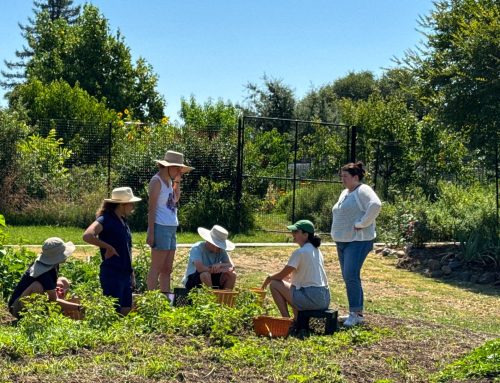
- Land & Nature Immersion: Building resilience and self-regulation through work in our gardens and on our campus.
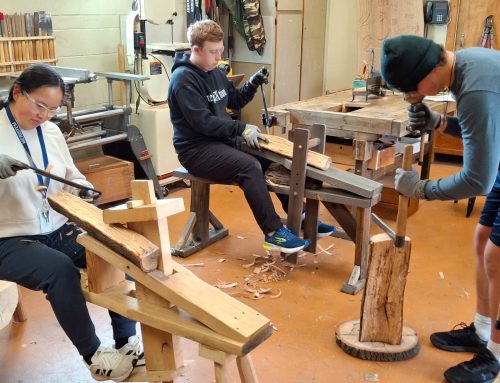
- Craft & Resistance Training: Developing persistence and problem-solving skills through hands-on projects in our woodshop and craft studios.
- Therapeutic Movement: Integrating the body and mind to build a strong foundation for emotional regulation.
- Self-Leadership & Executive Functioning: Applying learned skills in real-world community settings.
This integrated approach allows students to see the connections between what they are learning in different areas of their lives. It helps them build a holistic sense of competence and confidence. A comprehensive program can be a powerful accelerator for growth, providing a supportive and challenging environment where young adults can truly discover who they are and what they are capable of.
LEARN MORE >> Autism Transition Planning: Preparing Your Young Adult for Life After High School
Combining Options: Creating a Customized Plan
It is important to remember that these options are not mutually exclusive. The best transition plan is often a customized blend of different programs and services. A young adult might attend a vocational program in the morning and a social skills group in the afternoon. They might live in a supported apartment while working a part-time job with the help of a job coach. The possibilities are endless. The goal is to create a plan that is as unique as the individual it is designed for. This is the essence of person-centered planning.
How to Evaluate Program Quality and Fit
Choosing the right program is one of the most important decisions you will make in the transition process. It is essential to do your homework and evaluate each program carefully. Here are some key things to consider:
| Area to Evaluate | Green Flags (Signs of a Good Program) | Red Flags (Signs for Concern) |
|---|---|---|
| Philosophy & Approach | Person-centered, strengths-based, focused on independence. | One-size-fits-all, deficit-based, focused on compliance. |
| Staff & Training | Experienced, well-trained staff with low turnover. | High staff turnover, lack of specialized training. |
| Curriculum & Activities | Meaningful, skill-building activities with clear goals. | A focus on keeping people busy with no clear purpose. |
| Community Integration | Frequent, meaningful opportunities for community engagement. | Limited or no time spent in the community. |
| Outcomes & Data | The program tracks and shares data on student progress and outcomes. | The program cannot provide any data on its effectiveness. |
When you visit a program, trust your gut. Does it feel like a place where your child will be respected, challenged, and supported? Does it feel like a place where they can grow?
Success Stories: Different Pathways to Independence
There is no single path to a successful adult life. Success can look like a full-time job and an independent apartment. It can also look like part-time volunteer work and living in a supported community. The goal is not to force every individual into the same mold. The goal is to help each person find their own unique path to a life of purpose, connection, and fulfillment. At Meristem, we have seen students go on to a wide variety of successful outcomes, from competitive employment to continued education to meaningful volunteer work. Each path is different, and each one is a success.
How to Access and Fund Different Options
Navigating the funding system for adult services can be one of the most challenging parts of the transition process. Unlike the school system, there is no single, centralized source of funding. Instead, you will need to piece together funding from a variety of sources, including:
- Medicaid Waivers: These are the primary source of funding for many adult services, including day programs and residential supports. Each state has different waiver programs with different eligibility requirements. The Center for Public Representation has a wealth of information on this topic.
- Supplemental Security Income (SSI): This is a federal program that provides a monthly income to individuals with disabilities who have limited income and resources.
- Vocational Rehabilitation (VR): As mentioned earlier, your state’s VR agency can be a valuable source of funding for vocational training and employment supports.
- Private Pay: Some families choose to pay for services out-of-pocket. This can provide more flexibility and choice, but it is not a financially viable option for everyone.
It is important to start exploring your funding options early, as the application process can be long and complex. Connecting with a local disability advocacy organization can be a great way to get help navigating the system.
Conclusion: The Journey to a Fulfilling Adult Life
The transition to adulthood is a journey, not a destination. It is a process of exploration, discovery, and growth. There will be challenges along the way. But with careful planning, a strong support system, and a focus on the individual’s strengths and dreams, a fulfilling and independent adult life is absolutely within reach. The end of high school is not the end of the road. It is the beginning of a new and exciting new chapter.
Voices of Community Podcast
Join us for conversations with autistic adults, families, and professionals who are helping shape a more inclusive world. Each episode shares personal stories, insights, and perspectives from across the Meristem community and beyond.