Introduction
In the search for effective educational methods for autistic young adults, one principle stands out with increasing clarity and scientific support: learning by doing. Known formally as experiential learning, this active, hands-on approach is proving to be a powerful catalyst for building the real-world skills, social competencies, and self-confidence that are essential for a successful transition to adulthood. For a population often underserved by traditional, lecture-based education, experiential learning is not just a different method—it is a fundamentally better one.
Traditional classrooms often ask students to passively absorb information, a model that can be particularly challenging for autistic learners who may struggle with auditory processing, abstract concepts, or the sensory environment of a typical school. Experiential learning flips this model on its head. It posits that true understanding is not achieved by listening, but by doing. It is the process of acquiring knowledge through direct experience, reflection, and application. This could mean learning about botany by planting a garden, understanding physics by building a structure, or developing social skills by collaborating on a real-world project.
This article will delve into the evidence and theory behind experiential learning, exploring why it is so uniquely suited to the strengths of autistic individuals. We will break down the mechanics of Kolb’s Experiential Learning Cycle, examine the compelling data from recent research, and showcase how this approach translates into tangible, life-changing outcomes. For anyone dedicated to helping an autistic young adult thrive, understanding the power of experiential learning is no longer optional—it is essential.
What is Experiential Learning? The Four-Stage Cycle of Understanding
Experiential learning is more than just “hands-on activities.” It is a structured, cyclical process of learning and growth that was most famously articulated by psychologist David Kolb. His model, known as the Experiential Learning Cycle, provides a roadmap for how we convert experiences into genuine, lasting knowledge. This cycle consists of four distinct stages that feed into one another, creating a spiral of ever-deepening competence [1].
Understanding this cycle is key to grasping why it is so effective for autistic learners. It moves beyond rote memorization and instead engages the whole person in a dynamic process of discovery, reflection, and application.
| Stage | Description | Role in Learning for Autistic Individuals |
|---|---|---|
| 1. Concrete Experience | This is the “doing” stage. The learner actively participates in a new experience or a familiar one in a new way. It is tangible, immediate, and sensory. | Provides a clear, non-abstract starting point. It grounds learning in the real world, which can be easier to process than theoretical concepts. |
| 2. Reflective Observation | The learner steps back to review the experience. They ask questions like, “What happened?” “What did I see, feel, or think?” | Offers a crucial, low-pressure opportunity to process the experience without the demand for immediate performance. It allows for internal reflection, a strength for many autistic individuals. |
| 3. Abstract Conceptualization | The learner makes sense of the experience by forming new ideas or connecting it to existing knowledge. They look for patterns and draw conclusions. | This stage bridges the gap between the concrete and the abstract. It helps learners develop flexible thinking by creating mental models that can be applied to other situations. |
| 4. Active Experimentation | The learner uses their new understanding to try things out. They test their theories, solve problems, and make decisions, which leads to a new concrete experience. | Empowers the learner to take agency. It is a safe, supported way to practice new skills and strategies, building confidence and reinforcing the learning from the previous stages. |
Why This Cycle Resonates with Autistic Learners
The power of Kolb’s cycle for autistic young adults lies in its structure and its alignment with neurodivergent learning strengths. Here’s why it works so well:
- It Reduces the Burden of Abstract Language: The cycle begins with a concrete action, not a complex verbal explanation. This provides an immediate, shared context that reduces the cognitive load required to process abstract instructions or social cues.
- It Honors the Need for Processing Time: The Reflective Observation stage is built-in processing time. It validates the need to step back and think, a critical component of learning for individuals who may process information more deeply or deliberately.
- It Fosters Flexible Thinking: Autistic individuals can sometimes struggle with rigid thinking. The cycle of moving from a specific experience (Concrete Experience) to a general principle (Abstract Conceptualization) and then applying it to a new situation (Active Experimentation) is, in essence, a structured exercise in cognitive flexibility.
- It Builds Self-Efficacy Through Action: The final stage, Active Experimentation, is where the learner takes charge. By providing opportunities to test their own ideas and see the results, the cycle builds a profound sense of competence and self-efficacy. The learner isn’t just told they are capable; they prove it to themselves, again and again.
Instead of fighting against an individual’s natural learning style, the experiential learning cycle embraces it, providing a predictable yet dynamic framework for building skills that stick.
The Evidence Behind Experiential Learning: What the Research Says
The effectiveness of experiential learning for autistic individuals is not just a compelling theory; it is an evidence-based practice supported by a growing body of scientific research. While the approach has been used in progressive education for decades, recent large-scale studies have begun to quantify its significant benefits for the autism community, providing a strong mandate for its use in educational and therapeutic programs.
A landmark 2023 systematic review and meta-analysis published in the prestigious journal JAMA Network Open provided some of the most comprehensive evidence to date [2]. Researchers analyzed 24 studies involving 717 autistic children and adolescents who participated in structured, nature-based interventions. A key finding was that the most effective programs were those that utilized a group-based, experiential learning model. The results demonstrated that this approach was associated with significant short-term improvements across a wide range of functional outcomes.
Key Findings from the 2023 Meta-Analysis
The study’s statistical analysis revealed that experiential learning interventions had a measurable and positive impact on the core challenges associated with autism.
| Functional Domain | Functional Domain | Effect Size (SMD) | Interpretation |
|---|---|---|---|
| Sensory Functioning | Inattention & Distractibility | 1.13 | Large Positive Effect |
| Social Functioning | Social Communication | -0.59 | Column 4 Value 2 |
| Behavioral Functioning | Hyperactivity | -0.56 | Column 4 Value 3 |
| Social Functioning | Social Cognition | -0.45 | Column 4 Value 4 |
Source: Fan, M. S. N., et al. (2023). Nature-Based Interventions for Autistic Children. JAMA Network Open. [2]
These numbers are more than just statistics; they represent meaningful changes in the lives of autistic young people. The exceptionally large effect size (1.13) on improving inattention and distractibility is particularly noteworthy. The ability to focus and engage is the foundation of all learning. This finding strongly suggests that an active, experiential approach can be more effective at capturing and sustaining the attention of autistic learners than traditional, passive methods.
Furthermore, the moderate improvements in social communication, social cognition, and behavior indicate that experiential learning is a powerful tool for developing the “soft skills” that are crucial for success in work and life. By learning in a hands-on, collaborative context, students are not just practicing skills—they are living them.
Why is “Learning by Doing” So Effective?
The data is clear, but what are the underlying reasons for these positive outcomes? The success of experiential learning can be attributed to the way it aligns with the neurological and psychological needs of autistic individuals.
- It Makes Social Interaction Purposeful and Concrete. For many autistic individuals, unstructured social interaction is a source of immense anxiety. Experiential learning provides a natural solution by embedding social interaction within a shared, goal-oriented task. When you are working together to build a bench or cook a meal, the focus is on the task, not on the social performance. Communication becomes a tool to achieve a concrete outcome, making it more predictable and less overwhelming.
- It Provides Clear, Immediate, and Non-Judgmental Feedback. The physical world provides instant, logical feedback. If you cut a piece of wood to the wrong length, it simply won’t fit. This type of feedback is neutral and directly related to the action taken, which can be much easier to process than the complex, emotionally laden feedback that often comes from people. This clarity reduces anxiety and builds confidence.
- It Engages the Whole Body and All the Senses. Many autistic people are kinesthetic learners who process information best when they can move their bodies and engage their senses. Sitting still in a chair and listening to a lecture is often the least effective way for them to learn. Experiential learning is inherently active and multisensory, which can improve focus, engagement, and memory retention.
- It Fosters Intrinsic Motivation. Experiential learning allows students to pursue their own interests and see the tangible results of their efforts. This sense of autonomy and accomplishment is a powerful driver of intrinsic motivation. When a student is genuinely invested in a project, they are more likely to persist through challenges, take creative risks, and develop a lifelong love of learning.
By creating a learning environment that is active, purposeful, and sensory-rich, experiential learning doesn’t just teach skills—it builds a foundation of confidence, competence, and curiosity that can last a lifetime.

Experiential Learning in Action: From Theory to Practice
Understanding the theory and evidence behind experiential learning is powerful, but seeing it in action truly brings its benefits to life. The principles of Kolb’s Cycle are not just academic; they are a practical framework that can be applied in any setting to build real-world skills. At programs like Meristem, the entire curriculum is designed around this “learning by doing” philosophy.
Let’s explore how this works in three distinct domains: vocational skills, independent living, and social-emotional development.
Building Vocational Skills in the Forge
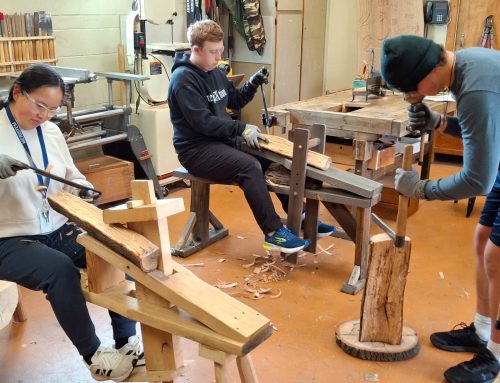
Imagine a young adult learning blacksmithing. This is not just a hobby; it is a rich, multisensory, and highly structured form of vocational training that perfectly illustrates the experiential learning cycle.
- Concrete Experience: The student’s initial task is to create a simple S-hook. They feel the heat of the forge, the weight of the hammer, and the resistance of the metal. They are directly, physically engaged in the process.
- Reflective Observation: After their first attempt, the hook might be misshapen or uneven. The student, alongside an instructor, steps back to observe. They compare their hook to the instructor’s model. They discuss what happened when they hammered the metal at different temperatures or with varying force.
- Abstract Conceptualization: Through this reflection, the student begins to understand the underlying principles of metallurgy. They learn that steel has a specific temperature range for optimal plasticity. They conceptualize the relationship between the force of a hammer blow and the resulting shape. They are forming a theory of how to work with metal.
- Active Experimentation: Armed with this new understanding, the student tries again. This time, they pay closer attention to the color of the heated metal and adjust the force of their hammer blows. They are actively testing their new theory. The resulting hook is more refined, providing a new, more successful concrete experience and reinforcing the entire learning cycle.
In this process, the student hasn’t just learned to make a hook. They have learned to follow a multi-step process, manage frustration, accept feedback, and take pride in a tangible accomplishment—all critical skills for future employment.
Developing Independent Living Skills in the Kitchen
Cooking is another quintessential experiential learning activity that is central to developing independence. Consider the task of learning to bake bread.
- Concrete Experience: A student follows a recipe for the first time, measuring ingredients, kneading the dough, and monitoring the baking process.
- Reflective Observation: The first loaf might be dense or flat. The student and their instructor discuss the process. Did they let the dough rise long enough? Was the oven at the right temperature? How did the dough feel when they were kneading it?
- Abstract Conceptualization: From this reflection, the student learns about the science of baking—the role of yeast, the development of gluten, and the importance of precise measurements and timing. They move from simply following steps to understanding the why behind them.
- Active Experimentation: The next time they bake, they apply this knowledge. They might experiment with a different rising time or kneading technique, observing the impact on the final product. This experimentation builds a deep, intuitive understanding that no cookbook alone could provide.
This cycle teaches far more than just baking. It builds executive function skills like planning, sequencing, and time management, which are essential for independent living.
Fostering Social Skills Through Collaborative Projects
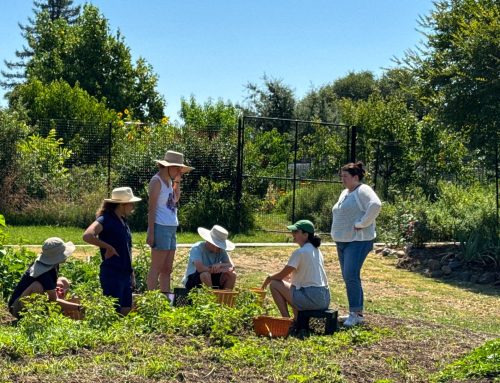
Experiential learning is also a powerful vehicle for social development. Imagine a group of students tasked with designing and building a community garden bed.
- Concrete Experience: The group must work together to plan the design, gather materials, and construct the bed. This involves negotiation, compromise, and shared physical effort.
- Reflective Observation: After the session, a facilitator might lead a group discussion. What parts of the collaboration were easy? What was challenging? How did the group handle disagreements? Did everyone feel their ideas were heard?
- Abstract Conceptualization: Through this guided reflection, students begin to develop a more abstract understanding of social dynamics. They learn concepts like “active listening,” “consensus building,” and “dividing labor.” They connect their specific experience to the broader principles of effective teamwork.
- Active Experimentation: During their next collaborative project, the students consciously try to apply these concepts. They might decide to appoint a facilitator for disagreements or create a system to ensure everyone has a chance to speak. They are actively experimenting with new social strategies in a safe and supportive environment.
This approach to social learning is far more effective than simply talking about social skills. It allows students to learn and practice these complex skills in a natural, goal-oriented context, building the social competence and confidence needed to form meaningful relationships.

Ready to explore the possible? Contact us today to learn more.
Conclusion: Building a Future Through Experience
For too long, education for autistic young adults has been approached with a deficit-based mindset, attempting to fit neurodivergent learners into a neurotypical system that often does more harm than good. The shift toward evidence-based practices like experiential learning represents a more hopeful, effective, and respectful paradigm. It is an approach that does not ask, “How can we fix this student?” but rather, “How can we create an environment where this student can thrive?”
The power of “learning by doing” lies in its profound alignment with the strengths and needs of autistic individuals. By grounding learning in concrete, hands-on experiences, the experiential model reduces the anxiety of abstract social and academic demands. It provides a structured, cyclical process for building deep, authentic understanding, moving beyond rote memorization to genuine competence. As the research clearly shows, this active, engaged approach leads to significant improvements in attention, social communication, and behavior—the very skills that are foundational to a successful and independent life.
From the forge to the farm, from the kitchen to the community, experiential learning provides a dynamic and effective framework for building real-world skills. It fosters independence not by lecturing about it, but by creating daily opportunities to practice it. It builds confidence not with empty praise, but with the undeniable proof of tangible accomplishment. For parents, educators, and professionals seeking a path forward, the message is clear: if you want to help an autistic young adult build a fulfilling future, don’t just tell them how. Involve them, engage them, and empower them to learn by doing.
Take the Next Step
At Meristem, experiential learning is the cornerstone of our program. We have seen firsthand how this evidence-based approach can unlock the potential within autistic young adults, helping them transition to college, careers, and independent living with confidence and competence.
Discover Meristem’s Transformative Programs to learn more about how we put the power of experiential learning into action every day.
Voices of Community Podcast
Join us for conversations with autistic adults, families, and professionals who are helping shape a more inclusive world. Each episode shares personal stories, insights, and perspectives from across the Meristem community and beyond.