Introduction
In the journey of education, one of the most fundamental goals is to guide a student from a state of dependence to one of independence. For autistic young adults, this journey can be complex, often requiring a more deliberate and structured approach than traditional teaching methods provide. The key to success is not to simply present information and hope for the best, nor is it to provide so much support that the student never learns to stand on their own. The key lies in finding the delicate, dynamic balance between support and challenge. This is the art and science of instructional scaffolding.
Scaffolding is an evidence-based teaching practice that provides temporary, structured support to a student as they learn a new skill—much like a scaffold supports a building during construction. This support is then systematically withdrawn as the student’s own competence grows, a process known as the gradual release of responsibility. It is a powerful framework that ensures a learner is never asked to do something they are unprepared for, yet is always being gently pushed to grow.
This article will explore the critical role of scaffolding in the education of autistic learners. We will break down the “I Do, We Do, You Do” model, examine why this approach is so effective for reducing anxiety and building executive function skills, and provide practical examples of how scaffolding is used to teach everything from vocational tasks to independent living skills. For anyone committed to fostering genuine autonomy in an autistic young adult, understanding how to effectively scaffold learning is an indispensable skill.

What is Instructional Scaffolding? A Blueprint for Building Competence
At its core, instructional scaffolding is a teaching method rooted in the work of psychologist Lev Vygotsky, who introduced the concept of the “Zone of Proximal Development” (ZPD). The ZPD is the metaphorical space between what a learner can do independently and what they can achieve with the guidance and support of a more knowledgeable person [1]. Scaffolding is the practical process of providing that guidance. It is the temporary support structure that allows a learner to operate successfully within their ZPD, building skills and confidence along the way.
This is not the same as simply giving a student the answer or breaking a task down into smaller steps (though task analysis is a related and important strategy). Scaffolding is a dynamic, responsive process where the teacher constantly assesses the student’s needs and provides just enough support to keep them moving forward—a concept known as “just-in-time” support.
The Gradual Release of Responsibility: “I Do, We Do, You Do”
The most common and effective framework for implementing scaffolding is the gradual release of responsibility model. This simple, three-stage process ensures that the ownership of the learning is systematically transferred from the teacher to the student [2].
| Stage | Description | Teacher’s Role | Student’s Role |
|---|---|---|---|
| 1. “I Do” (Focused Instruction) | The teacher takes the lead, modeling the target skill while thinking aloud to make their internal process explicit. This is a clear, direct demonstration of what success looks like. | To demonstrate, model, and explain. | To observe and listen. |
| 2. “We Do” (Guided Instruction) | The teacher and student work on the skill together. This is a collaborative phase where the teacher provides prompts, cues, and feedback as the student begins to practice the skill. | To guide, prompt, and provide corrective feedback. | To practice with support and ask questions. |
| 3. “You Do” (Independent Practice) | The student practices the skill independently, applying what they have learned. The teacher’s role shifts to that of an observer, providing feedback and support only when necessary. | To observe, monitor, and provide reinforcement. | To practice independently and demonstrate mastery. |
This structured progression is what makes scaffolding so powerful. It creates a predictable and safe learning environment where the expectations are always clear. The student knows they will be shown what to do, will have a chance to practice with support, and will only be asked to perform independently when they are ready. This systematic approach is particularly effective for autistic learners, as it removes the anxiety-inducing uncertainty that can often accompany new learning experiences.
Why Scaffolding is a Game-Changer for Autistic Learners
The principles of scaffolding and gradual release are effective for all learners, but they are particularly transformative for autistic individuals. This is because the methodology directly addresses many of the core challenges related to executive functioning, anxiety, and processing speed that can make traditional learning environments so difficult to navigate.
By providing a clear, predictable, and supportive structure, scaffolding minimizes the cognitive and emotional load of learning, freeing up the student’s mental resources to focus on acquiring the new skill.
| Challenge Area in Autism | How Scaffolding Provides Support |
|---|---|
| Executive Function Deficits | The “I Do, We Do, You Do” model externalizes executive functions. The teacher initially handles the planning, sequencing, and monitoring, then gradually transfers these responsibilities to the student as they build capacity. |
| Anxiety and Fear of Failure | Scaffolding creates a safety net. The student knows they will not be asked to perform a task they are not ready for, which dramatically reduces performance anxiety and makes them more willing to take risks. |
| Difficulty with Processing Verbal Instructions | The “I Do” modeling stage is a powerful visual and behavioral demonstration that is often much easier to process than a long string of verbal instructions. It shows, rather than just tells. |
| Rigid Thinking and Cognitive Flexibility | During the “We Do” phase, instructors can model flexible thinking by verbalizing how they handle unexpected problems or adapt their strategy, providing a concrete example of how to shift approaches. |
| Task Initiation | The clear, step-by-step nature of a scaffolded task reduces the feeling of being overwhelmed, which is a common barrier to starting a task. The first step is always clear and achievable. |
Building a Bridge to Independence
Imagine asking a student to write a five-paragraph essay. For an autistic student with executive function challenges, this can feel like an impossibly vague and overwhelming task. Where do I start? How do I organize my thoughts? What if I do it wrong? This is where scaffolding builds a crucial bridge.
An instructor might scaffold this task by:
- (“I Do”) Modeling how to brainstorm ideas using a graphic organizer, thinking aloud as they group related concepts.
- (“We Do”) Collaboratively filling out a new graphic organizer with the student, prompting them with questions to help structure their own ideas.
- (“We Do”) Providing a sentence-starter template for the introductory paragraph and writing the first one together.
- (“You Do”) Asking the student to use the graphic organizer and the template to write the next body paragraph independently.
At each stage, the support is tailored to the student’s needs and gradually faded. The end goal is not just a completed essay; it is for the student to internalize the process of brainstorming, organizing, and writing, so they can eventually do it on their own. The scaffold isn’t the essay itself; it’s the temporary structure that teaches the process of writing. This distinction is fundamental. Scaffolding is not about creating dependence; it is a structured, systematic method for building the skills that lead to true independence.
Ready for to tale the next step? Reach out to our Admissions Office to get more information and schedule a tour of our campus.
Scaffolding in Practice: Building Skills at Meristem
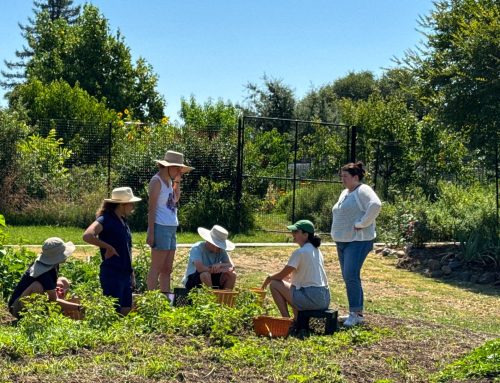
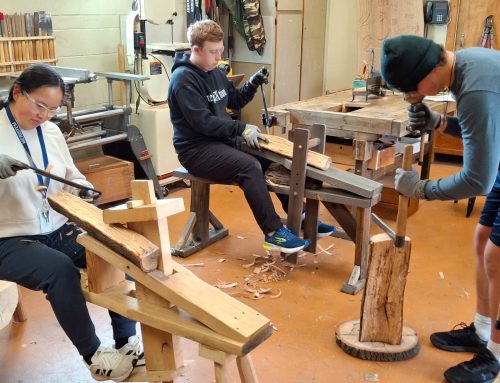
At Meristem, scaffolding is not an occasional strategy; it is woven into the fabric of every learning experience. Our instructors are trained to be expert diagnosticians, constantly assessing where a student is and providing the precise level of support they need to take the next step. This methodology is applied across our entire curriculum, from the forge to the farm to the classroom.
Example 1: Vocational Skills in the Woodshop
Goal: A student is learning to use a complex piece of machinery, like a lathe, to create a wooden bowl.
- Maximum Scaffolding (“I Do”): Initially, the instructor performs the entire operation, explaining each step and safety precaution. The student’s role is simply to observe.
- Moderate Scaffolding (“We Do”): The instructor might use a hand-over-hand technique, guiding the student’s hands as they hold the tool. This provides physical support while allowing the student to feel the sensory feedback of the process.
- Minimal Scaffolding (“We Do”): The instructor stands by and provides verbal prompts and reminders as the student operates the machine. For example, “Remember to check your speed,” or “Watch your hand position there.”
- Independent Practice (“You Do”): The student operates the machine from start to finish, with the instructor observing from a distance, ready to step in only if a safety issue arises.
As the student’s confidence and competence grow, the instructor systematically fades these scaffolds until the student has achieved full independence.
Example 2: Independent Living Skills in the Dorms
Goal: A student is learning to do their own laundry, a multi-step process that requires significant executive function skills.
- Maximum Scaffolding (“I Do”): An instructor provides a visual checklist with pictures and simple text for each step (e.g., 1. Separate colors. 2. Add detergent. 3. Select cycle). The instructor walks through the entire process with the student, pointing to each step on the checklist as they complete it.
- Moderate Scaffolding (“We Do”): The student uses the checklist, and the instructor is present to provide verbal prompts if the student gets stuck. For example, “What does the checklist say to do next?”
- Minimal Scaffolding (“You Do”): The student uses the checklist independently. The instructor might just check in at the beginning to ensure they have their supplies and at the end to confirm the laundry was successfully moved to the dryer.
- Full Independence: The student no longer needs the checklist and completes the entire chore on their own. The visual scaffold has been fully internalized as a mental routine.
In both of these examples, the support is temporary and designed to be removed. The goal is not to create a permanent crutch, but to build a permanent skill. By providing the right level of support at the right time, scaffolding empowers students to tackle increasingly complex tasks, building a powerful sense of mastery and self-efficacy that is the true foundation of independence.
Conclusion: The Art of Supportive Independence
The ultimate goal of education is to make the educator obsolete—to guide a student to a point where they have the skills, confidence, and internal strategies to navigate the world on their own. For autistic young adults, the path to this independence is paved with evidence-based practices that honor their unique learning profile. Instructional scaffolding, with its principle of gradual release of responsibility, is one of the most powerful tools we have to build that path.
By providing temporary, responsive support, scaffolding creates a learning environment that is both safe and challenging. It eliminates the anxiety of the unknown and the paralysis of being overwhelmed, allowing students to focus their energy on growth. The “I Do, We Do, You Do” model is more than just a teaching technique; it is a respectful and empowering framework that communicates a profound belief in the student’s potential. It says, “I will show you, I will help you, and I know that eventually, you will be able to do this on your own.”
This systematic process of building competence, one scaffolded step at a time, is how we move beyond teaching rote skills to fostering genuine, adaptable independence. It is how we build the executive functions, emotional regulation, and self-efficacy that allow an individual to not just survive, but thrive. By mastering the art of providing the right support at the right time, we can help autistic learners build a future of their own design.
Take the Next Step
Effective scaffolding is a cornerstone of the Meristem Method. Our instructors are experts in assessing student needs and providing the individualized support required to build lasting independence.
Learn More About Meristem’s Approach to Building Skills to see how we use scaffolding and other evidence-based practices to help our students succeed.
References[1] Vygotsky, L. S. (1978). Mind in society: The development of higher psychological processes. Harvard University Press.
[2] Pearson, P. D., & Gallagher, M. C. (1983). The instruction of reading comprehension. Contemporary Educational Psychology, 8(3), 317-344.
Voices of Community Podcast
Join us for conversations with autistic adults, families, and professionals who are helping shape a more inclusive world. Each episode shares personal stories, insights, and perspectives from across the Meristem community and beyond.