Introduction
In the diverse and complex world of autism, there is one truth that has become undeniably clear: there is no one-size-fits-all solution. The very nature of the autism spectrum, with its vast range of strengths, challenges, and sensory profiles, means that a standardized, cookie-cutter approach to education is not just ineffective—it can be actively detrimental. Yet, for decades, this is precisely the model that many autistic students have been expected to fit into. The result is often a cycle of frustration, anxiety, and untapped potential.
The antidote to this failed approach is individualized education. This is not simply about making minor accommodations or adjustments to a standard curriculum. It is a fundamental shift in philosophy, moving from a system that asks, “How can we make this student fit the program?” to one that asks, “How can we design a program to fit this student?” It is a deeply respectful, strength-based approach that recognizes each autistic young adult as a unique individual with a distinct set of interests, goals, and learning styles.
This article will explore the essential components of truly individualized autism education. We will discuss the importance of strength-based assessments, interest-led learning, and flexible pacing. We will also examine how proven educational philosophies like Montessori and Reggio Emilia provide a powerful framework for personalization, and how programs like Meristem synthesize these elements into a cohesive, student-centered model. For anyone looking to unlock the true potential of an autistic learner, understanding the principles of individualization is the essential first step.

The Failure of the One-Size-Fits-All Model
To appreciate the necessity of individualization, it is crucial to first understand why the traditional, standardized model of education so often fails autistic learners. The conventional school system is built on a foundation of averages—average learning pace, average sensory tolerance, and average social communication style. It is a system designed for the neurotypical majority, and its inherent rigidity creates a series of significant barriers for neurodivergent minds.
This mismatch is not a reflection of the student’s ability or potential, but a fundamental flaw in the design of the learning environment. The expectation is for the student to conform to the system, rather than for the system to adapt to the student. This can lead to a cascade of negative outcomes, including chronic anxiety, academic disengagement, and a diminished sense of self-worth.
| Aspect of Education | The Standardized Model (The Problem) | The Individualized Model (The Solution) |
|---|---|---|
| Curriculum | A fixed, universal curriculum is delivered to all students, regardless of their interests or prior knowledge. | The curriculum is flexible and co-created, leveraging the student’s deep, passionate interests as a gateway to learning broader concepts. |
| Pacing | All students are expected to learn the same material at the same pace, moving from one unit to the next according to a predetermined schedule. | Pacing is determined by the student’s mastery. They can spend more time on challenging concepts and move quickly through areas of strength. |
| Environment | The sensory environment is often chaotic and overwhelming (fluorescent lights, bells, crowded hallways), creating a high-stress backdrop for learning. | The environment is intentionally designed to be calming and regulating, with options for sensory retreat and engagement with nature. |
| Assessment | Learning is primarily measured through standardized tests that favor rote memorization and rapid processing. | Assessment is portfolio-based and performance-based, focusing on the student’s ability to apply skills in real-world, authentic contexts. |
| Socialization | Social interaction is often unstructured and based on complex, unwritten neurotypical social rules | Social skills are taught and practiced in structured, goal-oriented contexts (like collaborative projects), making social engagement more predictable and purposeful. |
When a student is forced into a system that is at odds with their neurological profile, they are set up for failure. An autistic student who is passionate about ancient history but is forced to spend six weeks on a subject that holds no interest for them is likely to become disengaged. A student who needs more time to process information but is rushed along by a rigid schedule may fall behind and develop a belief that they are “bad at school.” An individual with profound sensory sensitivities may spend so much cognitive energy just coping with the environment that they have none left for learning. The one-size-fits-all model doesn’t just fail to teach effectively; it can create a lasting negative association with learning itself.
The Core Components of Individualized Education
Truly individualized education is more than just a set of accommodations; it is a holistic philosophy built on a few core, non-negotiable principles. These principles work together to create a learning environment that is responsive, respectful, and highly effective.
1. A Strength-Based and Interest-Led Approach
The most profound shift in individualized education is the move from a deficit-based model to a strength-based model. Instead of starting with the question, “What can’t this student do?” we begin by asking, “What is this student passionate about? What are they good at?” For autistic individuals, who often have deep, intense interests (sometimes called “special interests” or “spins”), these passions are not a distraction to be managed; they are the most powerful engine for learning we have.
An interest-led approach leverages these passions as a gateway to broader knowledge and skills. For example:
- A student fascinated by trains can learn physics by studying engine mechanics, history by researching the development of the railway system, and social skills by collaborating on a model railroad project.
- A student who loves video games can learn coding and design by creating their own game, narrative skills by writing the game’s story, and executive function skills by managing the complex, multi-step project.
By anchoring learning in a student’s intrinsic motivation, we bypass the need for external rewards and punishments. The learning itself becomes the reward, leading to deeper engagement, greater retention, and a more positive relationship with education.
2. Flexible, Mastery-Based Pacing
In a standardized system, time is the constant and learning is the variable. In an individualized model, this is reversed: learning is the constant and time is the variable. Mastery-based pacing means that a student progresses to the next concept or skill only after they have demonstrated genuine understanding and competence with the current one. This is a critical departure from the traditional model, where a student might get a “C” on a foundational concept and then be rushed along to the next, more advanced topic, creating a shaky foundation that is bound to crumble.
For autistic learners, who may have an uneven skill profile (a “spiky” profile, with areas of profound strength alongside areas of significant challenge), mastery-based pacing is essential. It allows them to:
- Spend More Time Where Needed: If a student is struggling with a particular concept, they are given the time and support to work on it until they achieve mastery, without the shame or anxiety of “falling behind” their peers.
- Move Quickly Through Areas of Strength: Conversely, if a student quickly grasps a concept, they are not held back. They can move on to more advanced material, keeping them challenged and engaged.
This approach replaces the stress of the clock with a focus on genuine understanding, ensuring that learning is deep and durable.
3. Educational Philosophies of Individualization
This modern, personalized approach to education is deeply aligned with several well-established, child-centered educational philosophies. Methodologies like Montessori and Reggio Emilia, while not developed specifically for autism, provide powerful frameworks for implementing individualized learning.
- The Montessori Method: The Montessori approach is inherently individualized. It uses a prepared environment with specific, hands-on materials that students are free to choose based on their interests. The teacher acts as a guide, observing the child and presenting new challenges when they are ready. This emphasis on autonomy, sensory-based learning, and self-paced mastery makes it a natural fit for many autistic learners [1].
- The Reggio Emilia Approach: This philosophy is project-based and emergent, meaning the curriculum is co-created by teachers and students based on the students’ evolving interests. It views the environment as a “third teacher” and emphasizes learning through collaboration and the expressive arts. This flexible, interest-driven model is ideal for honoring the deep passions of autistic students [2].
By drawing on the principles of these proven philosophies, programs can create a culture of respect, autonomy, and deep engagement that forms the foundation of a truly individualized educational experience.
Ready to learn more about our enrollment process? Click here!
Individualization in Action: The Meristem Method
At Meristem, individualization is not an add-on; it is the foundational principle upon which our entire program is built. We have designed a holistic system that operationalizes the core components of personalized education, ensuring that each student’s unique strengths, interests, and needs are at the center of their learning journey. This is achieved through a combination of a dynamic, individualized curriculum and a deep commitment to understanding each student as a whole person.
Our process begins with a comprehensive, strength-based assessment. Before a student even arrives, we work to understand their passions, their areas of competence, and their personal goals. This creates a rich picture that goes far beyond a diagnostic label, allowing us to see the student for who they are and what they are capable of. This understanding forms the basis of each student’s Individualized Transition Plan (ITP), a living document that is co-created with the student and their family.
The Power of an Emergent, Interest-Led Curriculum
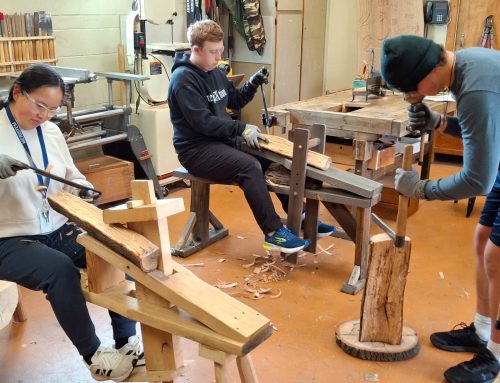
Unlike programs with a fixed curriculum, Meristem’s curriculum is emergent. While we have core competencies we aim to develop in areas like Life Skills & Social Skills, Therapeutic Movement, Land & Nature Immersion, Craft & Resistance Training, and Self-Leadership & Executive Functioning, the vehicle for developing these skills is tailored to the individual. Our instructors are masters of weaving skill-building into activities that align with a student’s passions.
For example, a student’s ITP might identify a goal of improving fine motor skills and the ability to follow a multi-step process. If that student is passionate about fantasy literature, their instructor might guide them toward a project in our leatherworking studio to create a hand-bound journal. The project is driven by the student’s interest, but the process is intentionally designed to build the target skills. This approach has several key benefits:
- Intrinsic Motivation: The student is not working to please a teacher or earn a grade; they are working to create something they genuinely care about. This intrinsic motivation is a powerful driver of engagement and persistence.
- Integrated Skill Development: A single project can build dozens of skills simultaneously. The leatherworking project develops not only fine motor skills but also executive functions (planning, sequencing), frustration tolerance (working through mistakes), and literacy (if they write in the journal).
- Authentic Assessment: The success of the project is in itself a form of assessment. A beautifully bound book is tangible proof of the student’s skill and effort, providing a much more meaningful measure of competence than a traditional test score.
A Culture of Flexibility and Respect
This individualized approach is supported by a culture of flexibility. Our mastery-based pacing means that a student who needs more time to complete their leatherworking project is given that time. There is no arbitrary deadline or pressure to “keep up.” The focus is on the quality of the learning and the pride of accomplishment.
Furthermore, our instructors are trained to be guides and collaborators, not just dispensers of information. They work alongside students, modeling skills, providing just-in-time support (scaffolding), and facilitating reflection. This respectful, side-by-side relationship creates a safe environment where students feel empowered to take risks, make mistakes, and truly own their educational journey. By combining a deep understanding of each student’s strengths with a flexible, interest-led curriculum, we create a learning experience that is as unique as the individuals we serve.
Conclusion: The Only Approach that Truly Works
For autistic young adults, the concept of individualized education is not a luxury or a progressive ideal; it is a fundamental necessity. The evidence and experience are clear: standardized, one-size-fits-all models fail to meet the complex needs of neurodivergent learners, often leading to disengagement and diminished self-worth. The only path to unlocking the profound potential of these individuals is to abandon the rigid system and embrace a philosophy of deep, authentic personalization.
By starting with a student’s strengths and passions, we ignite the intrinsic motivation that is the most powerful fuel for learning. By adopting a flexible, mastery-based pace, we replace the anxiety of the clock with a focus on deep, durable understanding. And by drawing on the wisdom of child-centered philosophies like Montessori and Reggio Emilia, we create a culture of respect, autonomy, and collaboration. This is not about making things easier; it is about making them more effective.
An individualized program is more than a collection of strategies; it is a commitment to seeing each student as a whole person, with a unique constellation of talents, interests, and goals. It is about building a program to fit the student, not forcing the student to fit the program. This respectful, responsive, and strength-based approach is the non-negotiable foundation for helping autistic young adults build the skills, confidence, and self-knowledge they need to create a future of their own choosing.
Take the Next Step
At Meristem, individualization is at the heart of everything we do. Our emergent curriculum and strength-based approach are designed to meet each student where they are and guide them toward their personal and professional goals.
Learn How Meristem Creates a Personalized Path for Every Student
References[1] Li, Y. (2025). Global autism prevalence, and exploring Montessori as a practical educational solution: a systematic review. Frontiers in Psychiatry, 16, 1604937.
[2] Edwards, C., Gandini, L., & Forman, G. (Eds.). (2012). The hundred languages of children: The Reggio Emilia experience in transformation. ABC-CLIO.
Voices of Community Podcast
Join us for conversations with autistic adults, families, and professionals who are helping shape a more inclusive world. Each episode shares personal stories, insights, and perspectives from across the Meristem community and beyond.