A quick overview for those on the go: Transitioning to adulthood is a critical phase for autistic young adults. This comprehensive checklist breaks down the process into manageable stages from ages 14 to 25. It covers essential steps like early IEP planning, exploring post-high school options, establishing adult healthcare, and navigating the shift to adult services like the Regional Center. By starting early and following a structured timeline, families can empower their young adults to build independence, secure employment, and thrive in their communities.
Key Takeaways: This guide provides a detailed, age-by-age autism transition checklist to help families navigate the complex journey to adulthood. It emphasizes the importance of early transition planning starting at age 14, including the young adult in IEP meetings, and actively exploring post-high school options. The checklist also highlights critical milestones such as applying for adult services (like the Regional Center), establishing adult healthcare providers, and addressing legal considerations to ensure a smooth and supported transition to independent living and employment.
The journey from high school to adulthood is a significant milestone for any young person, but for autistic young adults and their families, it requires careful, deliberate planning. The “transition cliff”—the sudden drop-off in services that often occurs after high school graduation—can be daunting. However, with a proactive approach and a structured timeline, this period can be transformed from a source of anxiety into a runway for success.
This comprehensive autism transition checklist is designed to guide parents, educators, and caregivers through the critical years from age 14 to 25. By breaking the process down into manageable, age-appropriate steps, you can ensure that your young adult is building the skills, securing the resources, and developing the confidence needed to thrive in adulthood.
How to Use This Checklist
This checklist is not a rigid set of rules, but rather a flexible roadmap. Every autistic individual is unique, with their own strengths, challenges, and aspirations. Some may achieve certain milestones earlier, while others may need more time and support.
Use this guide to spark conversations with your young adult, their educators, and their support team. Revisit it annually to track progress, adjust goals, and celebrate achievements. Remember, the ultimate goal of transition planning is to empower the young adult to lead a fulfilling, self-directed life.
Ages 14-16: Early Transition Planning
The federal Individuals with Disabilities Education Act (IDEA) mandates that transition planning must begin by the time a student turns 16, but many experts and states recommend starting as early as age 14 [1]. This early phase is about laying the groundwork, exploring possibilities, and shifting the focus toward the future.
Begin Transition Assessments
- Identify Strengths and Interests: Conduct formal and informal assessments to understand the student’s aptitudes, preferences, and areas where they excel.
- Evaluate Independent Living Skills: Assess current abilities in areas like personal hygiene, basic cooking, time management, and navigating the community.
- Determine Support Needs: Identify the level of support required for academic, social, and daily living tasks to inform future planning.
Include the Young Adult in IEP Meetings
- Introduce the IEP Process: Explain the purpose of the Individualized Education Program (IEP) and why their voice is essential.
- Encourage Participation: Start small by having them introduce themselves or share one goal, gradually increasing their involvement each year.
- Shift to Student-Led Planning: The goal is for the student to eventually lead their own IEP meetings, advocating for their needs and preferences.
Explore Interests and Strengths
- Broaden Horizons: Expose the young adult to a variety of hobbies, extracurricular activities, and potential career fields.
- Connect Interests to Careers: Help them understand how their passions (e.g., technology, animals, art) could translate into future employment.
- Foster Hobbies: Encourage participation in clubs or groups that align with their interests to build social connections and self-esteem.
Begin Building Self-Advocacy Skills
- Understand Their Diagnosis: Have open, age-appropriate conversations about autism and how it affects them personally.
- Identify Accommodations: Help them recognize the tools and supports that help them succeed (e.g., sensory breaks, visual schedules).
- Practice Asking for Help: Role-play scenarios where they need to request assistance or explain their needs to teachers or peers.
| Early Planning Focus Areas | Key Action Steps |
|---|---|
| Self-Discovery | Identify strengths, interests, and support needs through assessments. |
| IEP Involvement | Begin including the student in IEP meetings to foster ownership. |
| Skill Building | Focus on foundational self-advocacy and daily living skills. |

Ages 17-18: Active Planning
As high school graduation approaches, transition planning becomes more concrete. This phase involves finalizing goals, securing necessary services, and actively preparing for the next steps, whether that’s further education, employment, or specialized programs.
Finalize Transition Goals in the IEP
- Develop SMART Goals: Ensure transition goals are Specific, Measurable, Achievable, Relevant, and Time-bound.
- Align Goals with Post-Secondary Plans: Goals should directly support the student’s desired outcomes for education, employment, and independent living.
- Review and Adjust Annually: Regularly assess progress and modify goals as the student’s interests and abilities evolve.
Apply for Adult Services (Regional Center)
- Understand Eligibility: Research the criteria for adult services in your state. In California, this often involves the Regional Center system.
- Initiate the Intake Process: Begin the application process well before graduation, as wait times can be lengthy.
- Explore Available Supports: Learn about the services offered, such as job coaching, independent living skills training, and respite care.
Explore Post-High School Options
- Research College Programs: Investigate vocational schools, community colleges, and four-year universities with robust disability support services.
- Evaluate Transition Programs: Consider specialized programs like Meristem, which focus on experiential learning and practical skill development.
- Visit Campuses and Programs: Schedule tours and interviews to find the best fit for the young adult’s needs and goals.
Begin Work Experiences
- Seek Volunteer Opportunities: Encourage volunteering in areas of interest to build a resume and develop soft skills.
- Pursue Part-Time Employment: Look for supportive, entry-level jobs that offer a safe environment to learn workplace norms.
- Utilize School-Based Work Programs: Take advantage of any vocational training or job shadowing opportunities offered through the high school.
Ages 19-21: Implementation
This phase marks the transition from planning to action. The young adult is now actively engaging in their chosen post-secondary path, continuing to build essential skills, and navigating the shift to adult systems of care.
Enroll in Chosen Programs
- Finalize Enrollment: Complete all necessary paperwork and secure funding for college, vocational training, or transition programs.
- Establish Accommodations: Work with the disability services office at the chosen institution to ensure necessary accommodations are in place.
- Develop a Support Network: Identify key contacts, mentors, and peer support groups within the new environment.
Continue Skill Building
- Focus on Independent Living: Prioritize skills like budgeting, meal planning, public transportation, and household maintenance.
- Enhance Social Skills: Encourage participation in social groups, community events, and recreational activities to build a fulfilling social life.
- Refine Executive Functioning: Continue working on time management, organization, and problem-solving skills.
Establish Adult Healthcare Providers
- Transition from Pediatricians: Find adult primary care physicians and specialists who are knowledgeable about autism.
- Manage Medications: Teach the young adult how to fill prescriptions, understand their medications, and communicate with doctors.
- Understand Health Insurance: Navigate the transition from family health insurance to Medicaid, Medicare, or employer-sponsored plans.
Address Legal Considerations
- Explore Supported Decision-Making: Investigate alternatives to guardianship that empower the young adult to make their own choices with support.
- Consider Guardianship or Conservatorship: If necessary, consult with a legal professional to understand the options for protecting the young adult’s legal and financial interests.
- Establish a Special Needs Trust: Work with a financial planner to secure the young adult’s financial future without jeopardizing their eligibility for government benefits.
| Implementation Phase Priorities | Critical Tasks |
|---|---|
| Program Enrollment | Secure placement and accommodations in post-secondary programs. |
| Healthcare Transition | Establish adult medical providers and manage health insurance. |
| Legal & Financial | Address decision-making supports and long-term financial planning. |
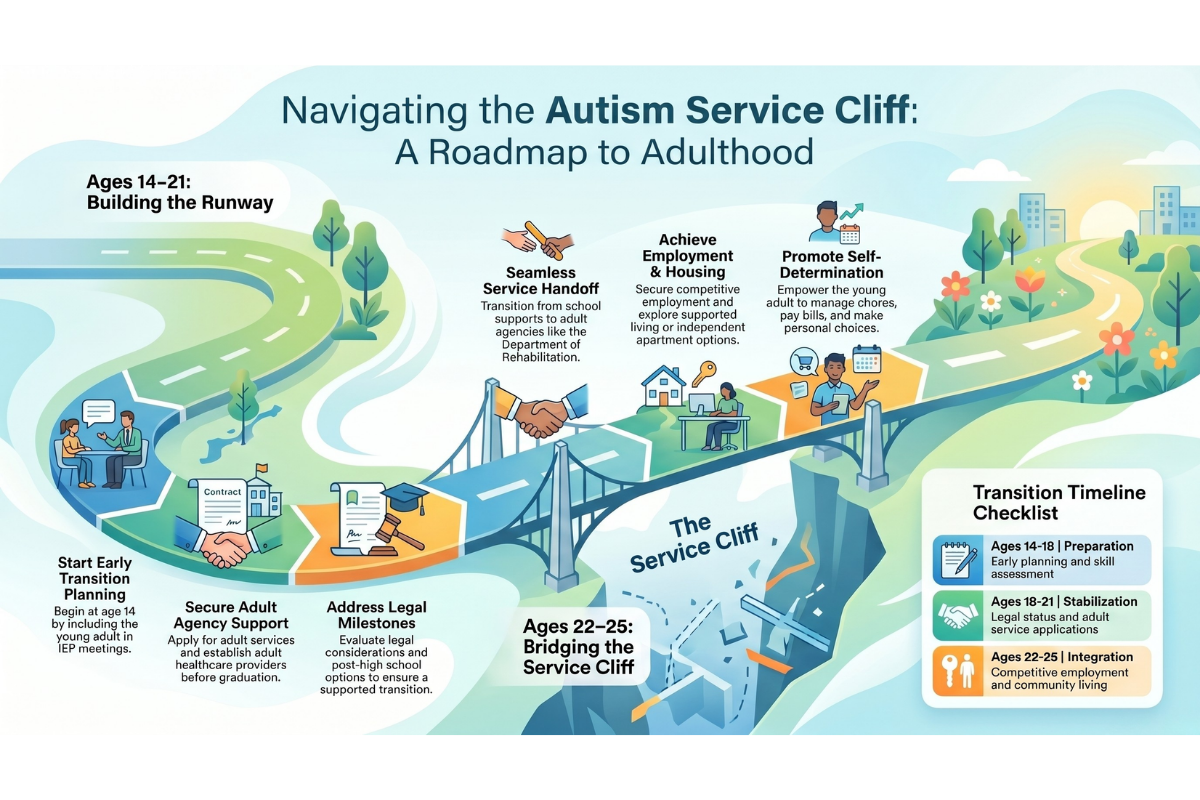
Ages 22-25: Ongoing Development
By age 22, most individuals have aged out of the public school system. This phase is about solidifying independence, establishing a career path, and continuing to grow within the community.
Transition from School Services to Adult Services
- Navigate the “Service Cliff”: Ensure a seamless handoff from school-based supports to adult agencies like the Regional Center or the Department of Rehabilitation.
- Advocate for Continued Support: Actively communicate with case managers to ensure the young adult receives the services they need to maintain their independence.
- Explore Community Resources: Identify local organizations, support groups, and recreational programs that cater to autistic adults.
Build Employment History
- Secure Competitive Employment: Work with job developers or vocational rehabilitation counselors to find and maintain meaningful employment.
- Develop Workplace Skills: Continue refining soft skills, such as communication, teamwork, and conflict resolution, in a professional setting.
- Explore Career Advancement: Discuss long-term career goals and identify opportunities for further training or promotion.
Work Toward Residential Independence
- Assess Housing Options: Explore various living arrangements, such as supported living, group homes, or independent apartments.
- Develop Household Management Skills: Ensure the young adult can manage chores, pay bills, and maintain a safe living environment.
- Foster Community Integration: Encourage the young adult to build relationships with neighbors and participate in local activities.
Continue Social and Skill Development
- Maintain Social Connections: Support the young adult in nurturing friendships and exploring romantic relationships.
- Pursue Lifelong Learning: Encourage continued education, whether through formal classes, workshops, or self-directed study.
- Promote Self-Determination: Continue to empower the young adult to make their own choices, set their own goals, and advocate for their own needs.
Next Steps: Creating Your Personalized Timeline
Transition planning is a marathon, not a sprint. The key to success is starting early, staying organized, and remaining flexible. Use this checklist as a foundation to create a personalized timeline that reflects your young adult’s unique journey.
How Programs Support Each Stage of Transition
Navigating this complex process can be overwhelming, but you don’t have to do it alone. Specialized programs like Meristem are designed to support autistic young adults through every stage of this transition.
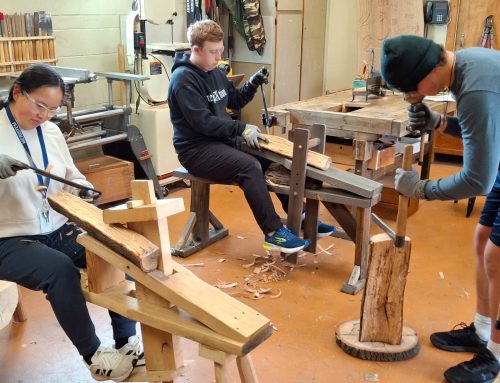
Meristem’s experiential learning model focuses on the practical application of skills. Whether it’s learning sustainable agriculture in the biodynamic garden, developing culinary and customer service skills in the Meristem Cafe, or mastering the nuances of independent living, the curriculum is tailored to bridge the gap between high school and adulthood. By providing a supportive, real-world environment, these programs help young adults build the confidence and competence they need to succeed.
Ready to take the next step in your transition planning?
Navigating the transition to adulthood requires expertise and a tailored approach. Schedule a consultation with our team to learn how Meristem can support your young adult’s journey to independence, or explore our Classes & Offerings to see our programs in action.
References
[1] “Transition to Adulthood Tool Kit.” Autism Speaks, www.autismspeaks.org/tool-kit/transition-adulthood-tool-kit. Accessed 18 Mar. 2026.
[2] “Health care transition for autistic adolescents and young adults: A pilot rural and urban comparison survey study.” Autism, 2025, journals.sagepub.com/doi/abs/10.1177/13623613241304495. Accessed 18 Mar. 2026.
Voices of Community Podcast
Join us for conversations with autistic adults, families, and professionals who are helping shape a more inclusive world. Each episode shares personal stories, insights, and perspectives from across the Meristem community and beyond.