Key Takeaways: The Meristem Method in Practice
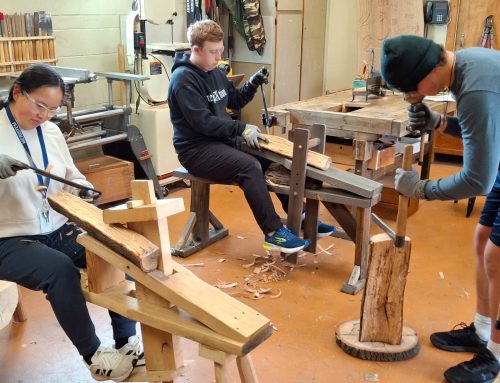
This week, we step into the Meristem woodshop to see the Meristem Method in action. Led by instructor JT, students in our Day Program recently completed a large-scale project: a cedar and redwood germination table for the campus greenhouse. This project is more than just woodworking; it’s a powerful example of hands-on learning for autistic adults. Through this integrated build, students gain professional tool proficiency, learn essential communication and teamwork skills in a dynamic environment, and develop a deeper, more tangible understanding of the world around them.
Building for the Community: An Integrated Approach
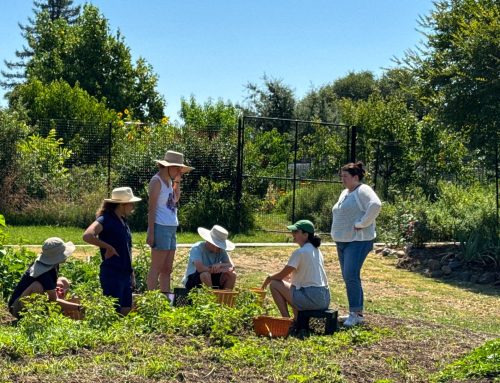
At Meristem, learning is not an abstract exercise; it is a deeply integrated, hands-on experience. A perfect example of this is the new germination table recently completed by students in our woodshop, a cornerstone of the Meristem Day Program. This is not just a class project. It is a functional piece of equipment, built by the woodshop for the garden, that will be used to germinate the seeds for the food we grow and eat on campus.
As instructor JT explains, this collaborative process is central to the Meristem Method. “Our programs are very integrated,” he notes. “The woodshop is helping the garden build a new table.” This table, crafted from durable cedar and redwood to withstand the greenhouse environment, represents a cycle of community support and tangible contribution. Students are not just learning skills in isolation; they are applying them to solve real-world problems that directly benefit their community. This approach fosters a sense of purpose and ownership that is critical for personal and professional growth.
| The Meristem Method in the Woodshop | Description |
|---|---|
| Integrated Projects | Woodshop students build functional items for other campus programs, like the garden. |
| Real-World Application | Learning is tied to tangible outcomes that benefit the entire community. |
| Purpose-Driven Work | Students see the direct impact of their skills, fostering a sense of ownership and pride. |
Beyond the Wood: Skills for Life
The process of building the table is where the most profound learning occurs. Students work with professional-grade tools like the DeWalt surface planer and impact drivers, learning not just the mechanics but the critical importance of safety and communication. “Learning how to use these tools safely and be able to communicate with each other while we’re in these environments… is huge,” JT emphasizes. For a young autistic adult, navigating a dynamic, sensory-rich environment while collaborating with a team is a powerful form of practice.
This goes beyond verbal instruction. It’s about finding a shared rhythm and flow. JT describes the process of pushing long boards through a machine together, where students learn to “read each other’s gestures and get in the rhythm.” This non-verbal communication and collaborative flow are essential skills for any workplace. It’s a testament to the power of experiential learning, where knowledge is constructed through the transformation of experience.
| Core Skills Developed | Description |
|---|---|
| Tool Proficiency | Safely operating professional-grade woodworking equipment. |
| Workplace Communication | Verbal and non-verbal communication to ensure safety and efficiency. |
| Teamwork & Collaboration | Finding a shared rhythm and flow to accomplish a common goal. |
| Patience & Presence | The instructor’s role in providing a “guiding hand” and being okay if things go wrong. |
Changing How You See the World
JT reflects on the deeper impact of this hands-on work. When you get to touch something, see how it’s made, and understand why it is stable and strong, it changes your perception forever. “I doubt they’re ever going to look at a board or a deck or anything without thinking a little bit about how it was made or what’s holding it together,” he says.
This is a fundamental shift from being a passive consumer to an active, engaged observer. Students might start noticing the types of screws used in a deck or the joinery in a piece of furniture. This expanded context is a core goal of the Meristem Method. Even if a student never builds another table, the experience has fundamentally altered their relationship with the physical world. This aligns with the principles of situated learning theory, which argues that learning is most effective when it takes place in the context in which it is to be applied.
This process is not about creating master carpenters; it’s about using the craft of woodworking to build transferable skills, confidence, and a greater awareness of the world. It’s about providing a space where young autistic adults can practice, make mistakes, and grow in a supportive, real-world environment. It is, in short, the Meristem Method brought to life in sawdust and cedar.
Learn more about our Day Program courses.
Voices of Community Podcast
Join us for conversations with autistic adults, families, and professionals who are helping shape a more inclusive world. Each episode shares personal stories, insights, and perspectives from across the Meristem community and beyond.