Introduction
For generations, we have conceptualized education as a process that happens indoors, within the four walls of a classroom. But a growing body of compelling scientific evidence is challenging this assumption, revealing that one of the most powerful and effective learning environments for autistic individuals may not have walls at all. This innovative approach, known as nature-based learning or nature-based intervention (NBI), leverages the unique therapeutic and educational properties of the natural world to foster growth, regulation, and skill development.
For autistic young adults, who often struggle with the sensory overload and social pressures of traditional indoor settings, the outdoors can be a profoundly restorative and effective space for learning. It is an environment that is simultaneously stimulating and calming, complex and predictable. From the gentle rustle of leaves to the solid feel of the earth, nature provides a rich, multisensory experience that can help organize the nervous system and improve focus.
This article will explore the science behind nature-based learning for autism. We will delve into the landmark research that quantifies its remarkable benefits, explain the psychological theories that underpin its effectiveness, and showcase how programs like Meristem are using their natural campuses as a core component of their evidence-based educational model. You will discover that integrating nature into the learning process is not just a pleasant addition—it is a powerful, data-backed strategy for unlocking the potential of autistic young adults.
The Evidence is In: Nature as a Proven Intervention
For years, the idea that spending time outdoors is “good for you” has been a piece of common-sense wisdom. Now, rigorous scientific research is providing the data to back up this intuition, formally establishing nature-based interventions as an evidence-based practice for autistic individuals. The findings are not just positive; they are, in some cases, remarkable.
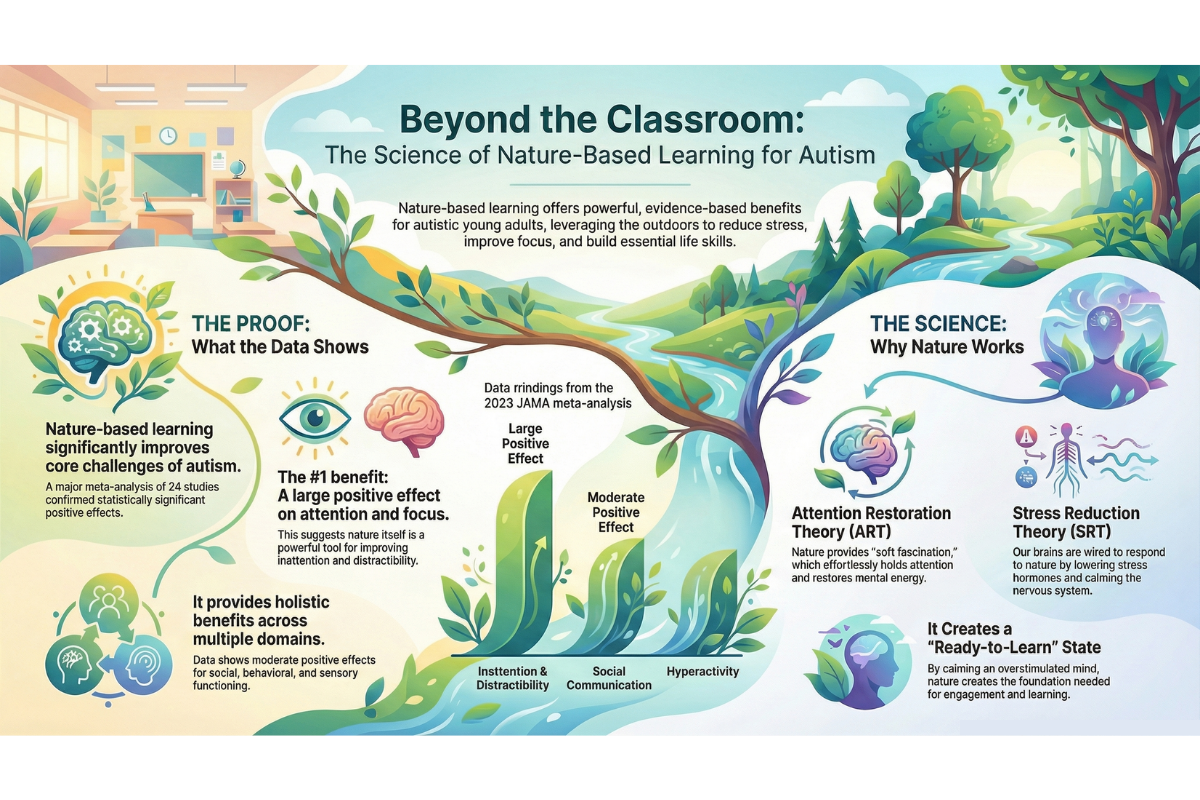
The most comprehensive and authoritative study on this topic to date is a 2023 systematic review and meta-analysis published in JAMA Network Open [1]. A meta-analysis is a powerful form of research that combines the data from multiple previous studies to identify overall trends and effects. In this case, the researchers analyzed 24 high-quality studies that included a total of 717 autistic children and adolescents. The interventions studied were varied but shared two key features: they were experiential (hands-on) and they took place in natural outdoor environments.
The results were overwhelmingly positive, showing that these nature-based programs led to statistically significant improvements in the core challenges associated with autism.
Quantifying the Impact: What the Data Shows
The power of this meta-analysis lies in its ability to calculate an “effect size” for different outcomes. An effect size is a standardized measure of the strength of an intervention’s impact. The results for nature-based learning were impressive across the board.
| Functional Domain | Specific Outcome Improved | Effect Size (SMD) | Interpretation of Effect |
|---|---|---|---|
| Sensory Functioning | Inattention & Distractibility | 1.13 | Large Positive Effect |
| Sensory Seeking Behavior | 0.77 | Moderate Positive Effect | |
| Sensory Sensitivity | 0.56 | Moderate Positive Effect | |
| Social Functioning | Social Communication | -0.59 | Moderate Positive Effect |
| Behavioral Functioning | Hyperactivity | -0.56 | Moderate Positive Effect |
Source: Fan, M. S. N., et al. (2023). Nature-Based Interventions for Autistic Children. JAMA Network Open. [1]
Two findings here are particularly groundbreaking. First, the large effect size (1.13) on improving inattention and distractibility is a powerful result. The ability to focus is a prerequisite for all other learning. This data suggests that learning in a natural environment can be a more effective way to improve attention in autistic individuals than many traditional, classroom-based interventions. It implies that the environment itself is a powerful tool for enhancing focus.
Second, the study demonstrated moderate positive effects across social, behavioral, and sensory domains. This holistic impact is crucial. It shows that nature-based learning isn’t just targeting one isolated symptom; it is promoting well-being and functional improvement across multiple, interconnected areas of life. It helps individuals feel better, behave in more regulated ways, and connect more effectively with others.
Why is Nature Such a Powerful Teacher? The Science of Restoration
The compelling data from the JAMA meta-analysis begs the question: why is the natural world so effective? The answer lies in the way natural environments interact with our brain and nervous system. Two key psychological theories help explain this phenomenon: Attention Restoration Theory and Stress Reduction Theory.
Attention Restoration Theory (ART)
Developed by environmental psychologists Rachel and Stephen Kaplan, Attention Restoration Theory (ART) proposes that there are two main types of attention: directed attention and soft fascination [2].
- Directed Attention is the kind of focus we use in a classroom or office. It requires effort to inhibit distractions and can be mentally fatiguing. For autistic individuals, who may already be expending significant mental energy to filter sensory input and navigate social cues, this form of attention is a rapidly depleting resource.
- Soft Fascination, on the other hand, is the effortless attention we experience in nature. Watching the clouds drift by, listening to the sound of a stream, or observing the intricate patterns on a leaf—these things hold our attention without requiring any mental effort.
ART posits that spending time in environments rich with soft fascination allows our directed attention to rest and replenish. For an autistic young adult, a walk in the woods is not an idle break; it is a necessary cognitive reset. It calms the overstimulated mind and restores the very attentional resources needed for learning. This is likely the primary mechanism behind the large effect size seen for improving inattention and distractibility.
Stress Reduction Theory (SRT)
Building on this, Stress Reduction Theory (SRT) suggests that natural environments have an innate ability to reduce stress and promote a state of calm [3]. The theory argues that our brains are evolutionarily wired to respond positively to natural settings. Exposure to green spaces has been shown to:
- Lower cortisol levels (the primary stress hormone)
- Reduce blood pressure and heart rate
- Increase activity in the parasympathetic nervous system (the “rest and digest” system)
For an individual whose nervous system is often in a state of high alert, the calming effect of nature is profoundly therapeutic. By lowering the baseline level of anxiety, the natural world creates the physiological and emotional state necessary for learning to occur. A student who is calm and regulated is a student who is ready and able to engage, problem-solve, and connect with others.
| Environmental Feature | Impact on Autistic Learner | Underlying Theory |
|---|---|---|
| Natural, Non-Threatening Stimuli | Reduces sensory overload and promotes a state of calm. | Stress Reduction Theory (SRT) |
| Softly Fascinating Elements | Replenishes directed attention and improves focus. | Attention Restoration Theory (ART) |
| Open, Uncrowded Spaces | Decreases social pressure and anxiety. | N/A |
| Rich Sensory (but not overwhelming) Input | Provides opportunities for healthy sensory seeking and integration. | Sensory Integration Theory |
The Meristem Campus: A 13-Acre Classroom
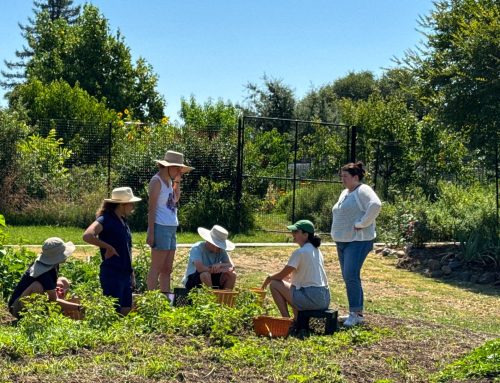
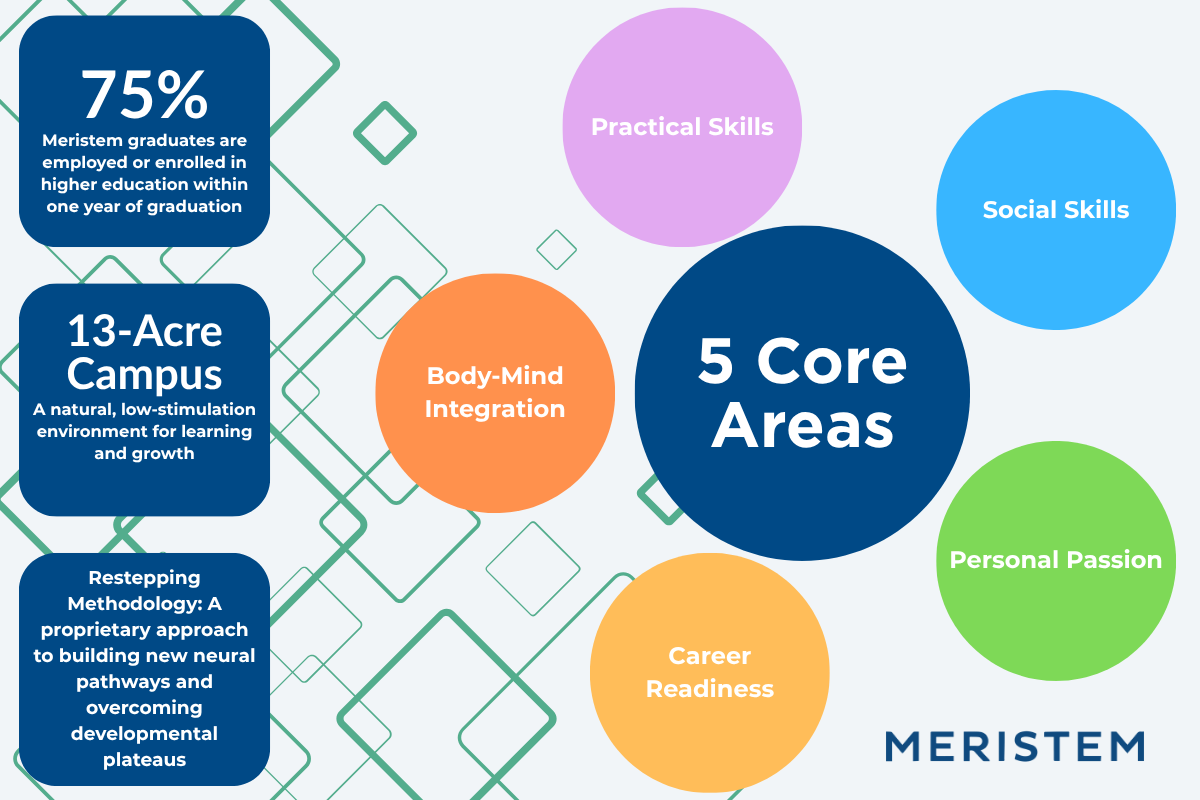
At Meristem, we don’t just believe in the power of nature; we have built our entire program around it. Our 13-acre campus, with its organic farm, gardens, wooded trails, and open fields, is not just a beautiful setting—it is our most important therapeutic and educational tool. It is a living laboratory where the principles of nature-based learning are put into practice every single day.
Our campus provides a dynamic and supportive environment where students can:
- Regulate Their Nervous System: A student feeling overwhelmed in a classroom can take a walk through the orchard, engage in the rhythmic work of weeding a garden bed, or simply sit by a tree. This access to nature is not a reward or a break; it is an integrated strategy for self-regulation.
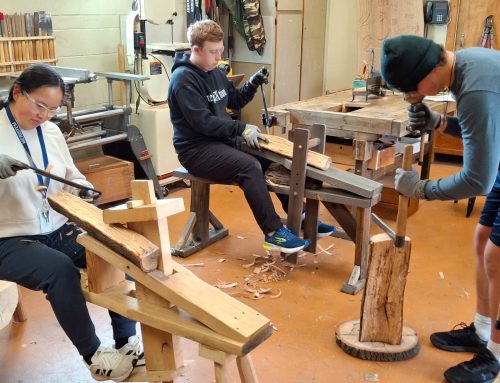
- Engage in Purposeful, Experiential Work: On our farm, students don’t just learn about biology; they experience it. They learn about cause and effect by planting seeds and harvesting crops. They learn about responsibility by caring for animals. This hands-on work is inherently motivating and provides endless opportunities for building vocational and life skills in a natural context.
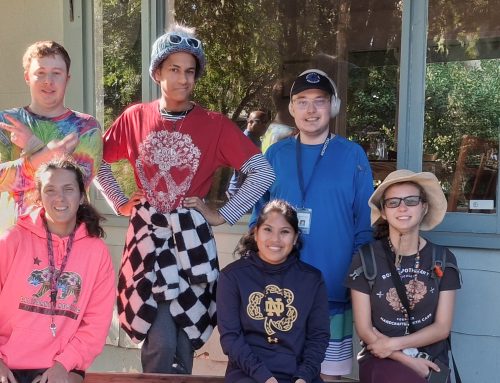
- Develop Social Skills in a Low-Pressure Environment: The shared tasks of working on the land create a natural context for social interaction. It is far less intimidating to talk to a peer while working side-by-side in a garden than it is to make small talk in a crowded cafeteria. The task itself provides a shared focus that scaffolds the social experience.
By integrating our evidence-based curriculum with our unique natural setting, we create a holistic learning environment that addresses the needs of the whole person. The campus provides the sensory regulation, the experiential learning opportunities, and the therapeutic calm that allows our students to do the hard work of building independent, fulfilling lives.
Conclusion: A More Natural Path to Learning
The educational landscape is finally beginning to catch up with what many have long known intuitively: that our connection to the natural world is a vital component of our well-being and development. For autistic young adults, this is not a minor point; it is a paradigm-shifting revelation. The powerful, evidence-based findings from recent research provide a clear mandate: nature is not just a pleasant backdrop for education, but a powerful and effective intervention in its own right.
By offering a sensory environment that is both calming and engaging, the outdoors provides a natural antidote to the overstimulation and anxiety of traditional classrooms. As Attention Restoration Theory and Stress Reduction Theory explain, nature has an innate ability to replenish our mental resources and soothe our nervous systems, creating the foundational state of regulation necessary for all other learning to occur. The data is unequivocal, showing that nature-based experiential learning leads to significant improvements in attention, social skills, and behavior.
Programs like Meristem, which are built on a foundation of nature-based, experiential learning, are at the forefront of this educational evolution. By using our 13-acre campus as a dynamic and integral part of our therapeutic method, we provide our students with a supportive environment where they can learn, grow, and thrive. The success of this approach demonstrates that when we align our educational strategies with the neurological needs of autistic learners, the potential for growth is limitless. The path to a more effective, compassionate, and successful model of autism education may, in fact, be a path through the woods.
Take the Next Step
Experience the transformative power of nature-based learning firsthand. Meristem’s unique campus and evidence-based program are designed to help autistic young adults build the skills and confidence they need for a successful future.
Explore Meristem’s Nature-Based Campus and Programs
References
[1] Fan, M. S. N., Li, W. H. C., Ho, L. L. K., Phiri, L., & Choi, K. C. (2023). Nature-Based Interventions for Autistic Children: A Systematic Review and Meta-Analysis. JAMA Network Open, 6(12), e2346715.
[2] Kaplan, S. (1995). The restorative benefits of nature: Toward an integrative framework. Journal of environmental psychology, 15(3), 169-182.
[3] Ulrich, R. S. (1983). Aesthetic and affective response to natural environment. In Behavior and the natural environment (pp. 85-125). Springer, Boston, MA.
Voices of Community Podcast
Join us for conversations with autistic adults, families, and professionals who are helping shape a more inclusive world. Each episode shares personal stories, insights, and perspectives from across the Meristem community and beyond.