Introduction
For educators, professionals, and parents dedicated to supporting autistic young adults, the search for an effective educational model can be a complex and often frustrating journey. Traditional classroom settings, with their rigid structures, sensory challenges, and emphasis on passive learning, frequently fall short of meeting the unique needs of neurodivergent students. This gap in educational efficacy is not just a matter of academic concern; it directly impacts the ability of these capable young adults to transition into independent, fulfilling lives and careers. The critical question then becomes: what actually works?
Fortunately, a growing body of research is illuminating a path forward. The most successful models are not monolithic; they are dynamic, individualized, and grounded in evidence-based practices. These are not just theories, but proven methodologies that leverage how autistic individuals naturally learn and interact with the world. From the immersive power of experiential learning to the profound regulatory benefits of nature-based interventions, these approaches offer a stark contrast to the one-size-fits-all model of conventional education.
This comprehensive guide will explore the leading evidence-based educational approaches for autism, drawing on recent scientific reviews and foundational learning theories. We will delve into the mechanics of experiential learning, the data-backed benefits of nature-based programs, and the structured skill-building of scaffolding and Behavioral Skills Training (BST). Ultimately, we will demonstrate how an integrated, holistic model—like the one practiced at Meristem—synthesizes these powerful techniques into a cohesive and transformative educational experience, paving the way for genuine independence and lifelong success.
The Limitations of Traditional Education for Autistic Learners
Before exploring what works, it is crucial to understand why conventional educational environments often fail autistic young adults. While well-intentioned, the standard high school or college classroom is typically designed for a neurotypical majority, inadvertently creating significant barriers for neurodivergent minds. These challenges are not a reflection of an autistic student’s ability to learn, but rather a fundamental mismatch between the learning environment and their neurological profile.
One of the most significant hurdles is sensory overload. Fluorescent lights, unpredictable noises, crowded hallways, and a constant stream of social information can create a state of chronic stress and anxiety. For an individual with heightened sensory sensitivity, the simple act of being in a classroom can be so neurologically taxing that it leaves little cognitive energy for learning. This constant sensory assault can lead to shutdown, meltdowns, or the need for escape, which can be misinterpreted as behavioral issues rather than a legitimate response to an overwhelming environment.
Furthermore, the pedagogical approach of most traditional classrooms relies heavily on passive learning. Students are expected to sit still, listen to lectures, and absorb information through auditory and text-based channels. This model is often at odds with the learning style of many autistic individuals, who thrive on hands-on engagement, visual and kinesthetic experiences, and the ability to explore subjects based on their deep, focused interests. The expectation to conform to a passive learning style can lead to disengagement and a perception of being a “poor student,” when in fact the teaching method is the primary source of the difficulty.
| Challenge in Traditional Education | Impact on Autistic Learner |
|---|---|
| Sensory Overload | Heightened anxiety, cognitive exhaustion, and potential for meltdowns or shutdowns. |
| Passive Learning Model | Disengagement, difficulty processing information, and a mismatch with kinesthetic and visual learning strengths. |
| Rigid Curriculum | Lack of accommodation for deep interests, leading to boredom and frustration. |
| Complex Social Demands | Social anxiety, difficulty navigating unwritten social rules, and challenges with group work. |
Finally, the social landscape of a traditional school is a complex web of unwritten rules, nuanced interactions, and rapid-fire communication that can be exhausting to navigate. For autistic students who may process social information differently, this can lead to significant social anxiety and isolation. The emphasis on group work, unstructured social time, and the expectation to “fit in” can create a secondary curriculum of social survival that overshadows academic goals. When these environmental, pedagogical, and social barriers are combined, it becomes clear that a different approach is not just beneficial, but necessary.
What Are Evidence-Based Educational Approaches?
In the field of autism education, the term “evidence-based” is more than just a buzzword; it is a commitment to using methods and strategies that have been rigorously tested and proven effective through scientific research. An evidence-based practice (EBP) is an instructional approach or intervention that has been shown through multiple high-quality studies to produce positive outcomes for the individuals it is designed to help. This reliance on data and scientific validation is what separates effective, ethical education from well-intentioned but unproven fads.
The process of identifying an EBP is systematic. Researchers conduct studies—often randomized controlled trials or single-subject design studies—to determine if an intervention leads to meaningful improvements in specific skills, such as social communication, behavior, or academic achievement. The results of these studies are then reviewed and synthesized by independent research bodies. When multiple studies consistently show that an approach works, it can be designated as an evidence-based practice.
This commitment to evidence is particularly critical in the autism community, which has historically been inundated with a wide array of proposed treatments, many of which lack scientific support and some of which have been proven harmful. By grounding educational programs in EBPs, we can ensure that the time, effort, and resources of autistic students and their families are invested in strategies that have the highest probability of success. It provides a framework for accountability and quality, moving beyond anecdotal success stories to a reliable, replicable system of support. As we explore the following educational models, it is this foundation of evidence that gives them their power and promise.

Ready to explore the possible? Contact us today to learn more.
The Power of Doing: Experiential Learning for Autistic Minds
At the heart of many modern, effective educational models is the principle of experiential learning, a philosophy perhaps best summarized by the adage, “Tell me, and I forget. Teach me, and I remember. Involve me, and I learn.” This approach stands in direct opposition to the passive learning model of traditional classrooms. Instead of asking students to simply absorb information, experiential learning requires them to actively engage with it, creating knowledge through the transformation of experience [1].
Kolb’s Experiential Learning Cycle
The most widely recognized framework for this approach is David Kolb’s Experiential Learning Cycle, which posits that deep learning occurs in four distinct stages:
- Concrete Experience: The cycle begins with a hands-on experience—a direct encounter with a task, a problem, or an activity. For an autistic young adult, this could be anything from tending to a garden to building a piece of furniture or navigating a social interaction in a supported environment.
- Reflective Observation: Following the experience, the learner steps back to reflect. What happened? What did they observe? What went well, and what was challenging? This stage is crucial for processing the experience without the pressure of immediate performance.
- Abstract Conceptualization: Based on their reflections, the learner begins to form new ideas, generalizations, or theories. They connect the specific experience to broader concepts, developing a mental model of how things work. This is where the “aha!” moments happen, as the practical becomes theoretical.
- Active Experimentation: Finally, the learner uses their new understanding to plan and try out new behaviors or strategies. They take the theory and put it back into practice, which creates a new concrete experience, and the cycle begins again, each time with a deeper level of understanding and skill.
This cyclical process is profoundly effective for autistic learners because it honors their natural cognitive strengths. It allows for deep, focused engagement with a topic (a common autistic trait), provides a structured process for reflection, and connects abstract concepts to tangible, real-world outcomes. It bypasses the need for rote memorization and instead fosters genuine, integrated understanding.
Why Experiential Learning Works for Autism
The effectiveness of experiential learning is not just theoretical; it is increasingly supported by evidence. A landmark 2023 systematic review and meta-analysis published in JAMA Network Open found that educational interventions for autistic children that were based on experiential learning showed significant positive outcomes [2]. While the review focused on nature-based settings, the underlying mechanism of experiential learning was a key component of the most successful programs. This approach is effective because it:
- Reduces the Cognitive Load of Social Communication: Hands-on tasks provide a shared focus that naturally scaffolds social interaction. Communication becomes about the task at hand, making it more concrete and less ambiguous than unstructured social conversation.
- Aligns with Sensory and Kinesthetic Learning Styles: Many autistic individuals are kinesthetic learners, meaning they learn best by doing, moving, and touching. Experiential learning is inherently multisensory and allows for physical engagement, which can improve focus and retention.
- Makes Abstract Concepts Concrete: Concepts like “collaboration,” “problem-solving,” and “persistence” can be difficult to teach through lectures. In an experiential model, these are not abstract ideas but lived realities. You learn collaboration by building something together; you learn persistence by working through a challenge until it is solved.
- Provides Immediate and Tangible Feedback: When you are working with physical materials, the feedback is direct and non-judgmental. If a measurement is wrong, the pieces won’t fit. This type of clear, logical feedback can be much easier to process than nuanced social or academic feedback.
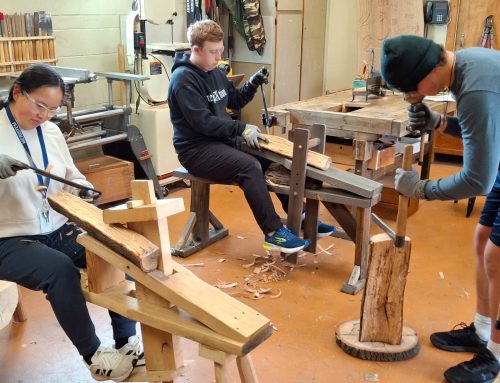
At Meristem, experiential learning is not just one tool among many; it is the foundational grammar of our entire educational model. Whether in the blacksmithing forge, the culinary arts kitchen, or on our 13-acre campus, our students are constantly engaged in Kolb’s cycle. They are not just learning about work and life skills; they are learning them through the direct, immersive, and transformative power of experience.
The Healing Power of the Outdoors: Nature-Based Interventions
Building directly on the principles of experiential learning, nature-based interventions (NBIs) have emerged as one of the most powerful and well-supported educational approaches for autistic individuals. These are not simply outdoor activities; they are structured, therapeutic, and educational experiences that take place in natural environments like forests, gardens, farms, and other green or blue spaces. The guiding principle is that the natural world itself is a powerful agent for learning, regulation, and growth.
The evidence supporting this approach is compelling. The 2023 meta-analysis in JAMA Network Open synthesized data from 24 different studies and found that NBIs were associated with significant, positive short-term outcomes across multiple domains of functioning for autistic children and adolescents [2]. The interventions studied were primarily group-based recreational therapies that used an experiential learning model, including activities like equine therapy, adventure programs, and horticultural therapy—all core components of the Meristem program.
Data-Backed Benefits of Learning in Nature
The results of the meta-analysis were remarkable, demonstrating that engaging with nature is not just a pleasant activity, but a potent intervention. The study found statistically significant improvements in social, behavioral, and sensory functioning.
| Functional Domain | Specific Outcome | Effect Size (SMD) | Significance |
|---|---|---|---|
| Sensory Functioning | Improved Inattention & Distractibility | 1.13 | Large |
| Improved Sensory Seeking | 0.77 | Moderate | |
| Improved Sensory Sensitivity | 0.56 | Moderate | |
| Behavioral Functioning | Reduced Hyperactivity | -0.56 | Moderate |
| Column 1 Value 5 | Reduced Irritability | -0.49 | Small-Moderate |
| Social Functioning | Improved Social Communication | -0.59 | Moderate |
| Improved Social Cognition | -0.45 | Small-Moderate |
Source: Fan et al., JAMA Network Open, 2023 [2]
Perhaps the most striking finding was the large effect size (1.13) on improving inattention and distractibility. In an educational context, the ability to focus is the gateway to all other learning. The fact that nature-based experiential learning can have such a profound impact on this core executive function skill is a game-changer. It suggests that for autistic learners, the most effective classroom may not have walls at all.
Why is Nature So Effective?
Researchers theorize that natural environments work on several levels to support autistic individuals:
- Effortless Attention and Sensory Regulation: Unlike a busy classroom, which is filled with direct, often harsh stimuli (fluorescent lights, loud bells), nature is filled with indirect, soft fascinations (the rustling of leaves, the flow of water). This allows the brain to recover from the mental fatigue of directed attention, a concept known as Attention Restoration Theory [3]. The natural world provides a rich but gentle sensory landscape that can be inherently calming and organizing for a nervous system prone to overstimulation.
- Reduced Stress: A large body of research demonstrates that spending time in green spaces lowers cortisol levels, reduces heart rate, and decreases stress [4]. By lowering the baseline level of anxiety, nature-based learning frees up cognitive resources that can then be used for learning, social engagement, and skill development.
- Intrinsic Motivation: Nature provides endless opportunities for exploration, discovery, and problem-solving. This inherent novelty and engagement can be a powerful motivator, encouraging learners to take risks, try new things, and persist through challenges.
This is precisely why Meristem’s 13-acre campus is not just a setting, but an integral part of our therapeutic and educational method. It is a living laboratory for experiential learning, a natural sensory regulator, and a space where students can connect with the world in a way that feels safe, engaging, and restorative. From our organic farm to our wooded trails, the campus provides a dynamic environment where students can build skills, gain confidence, and find a sense of belonging.
Building Blocks for Success: Integrating Multiple Evidence-Based Practices
While experiential and nature-based learning provide the foundational environment for growth, a truly effective educational model also requires a robust toolkit of specific, evidence-based instructional techniques. These practices provide the necessary structure to build complex skills, from social communication to vocational competencies. The most successful programs do not rely on a single methodology but instead weave together multiple proven strategies to create a flexible, responsive, and highly individualized learning experience.
Scaffolding and the Gradual Release of Responsibility
One of the most critical evidence-based practices is scaffolding. Just as a scaffold provides temporary support during the construction of a building, instructional scaffolding provides temporary support to a learner as they acquire a new skill. This support is then systematically faded out as the student’s competence and confidence grow, a process known as the gradual release of responsibility [5].
This framework is often structured around a simple but powerful progression:
- I Do (Teacher Modeling): The instructor first demonstrates the skill, explaining their thought process and highlighting critical features.
- We Do (Guided Practice): The instructor and student then perform the skill together, with the instructor providing guidance, feedback, and support.
- You Do (Independent Practice): Finally, the student performs the skill independently, demonstrating mastery.
This approach, rooted in Vygotsky’s social constructivist theory, is exceptionally effective for autistic learners. It makes the learning process predictable, breaks down complex tasks into manageable steps, and provides a safety net that encourages risk-taking. By ensuring a student is never asked to perform a task they are not prepared for, scaffolding minimizes anxiety and frustration, building a foundation of success that fosters a genuine desire to learn and grow.
Behavioral Skills Training (BST)
Behavioral Skills Training (BST) is another powerful, evidence-based method for teaching new skills, particularly in the domains of social and communication behaviors. It is a highly structured and performance-based approach that consists of four key components:
- Instruction: The skill is clearly described to the learner.
- Modeling: The instructor demonstrates the correct way to perform the skill.
- Rehearsal: The learner is given an opportunity to practice the skill.
- Feedback: The instructor provides immediate positive and corrective feedback on the learner’s performance.
BST is a cornerstone of modern Applied Behavior Analysis (ABA) and has been shown to be highly effective for teaching a wide range of skills to autistic individuals, from initiating conversations to performing job-related tasks [6]. Its structured, competency-based format provides the clarity and repetition that many autistic learners need to achieve mastery and generalize skills to new situations.
Child-Centered, Interest-Led Philosophies
Complementing these structured techniques are educational philosophies that emphasize student autonomy and interest. Approaches like Montessori and Reggio Emilia have gained traction as promising models for autistic learners because their core principles align so well with neurodivergent strengths.
- The Montessori Method: This approach is highly individualized, sensory-focused, and allows children to learn at their own pace. Its emphasis on practical life skills, structured environments, and hands-on, tactile materials can be an ideal fit for autistic students who thrive with clear processes and kinesthetic learning [7].
- The Reggio Emilia Approach: This philosophy is project-based and child-centered, encouraging students to do deep dives into topics that capture their interest. It views the environment as a “third teacher” and uses extensive documentation (photos, notes) to make learning visible, which can be a powerful tool for communication and reflection [8].
While more ASD-specific research is needed to formally designate these as evidence-based practices for autism, they are widely considered to be evidence-aligned. They provide a framework for honoring the individual, leveraging a student’s intrinsic motivation, and creating a learning environment that is collaborative and respectful rather than prescriptive.
These practices are not mutually exclusive. In fact, they are most powerful when integrated. A great educator might use BST to teach a specific social skill within the context of a student-led Reggio Emilia-style project, all while scaffolding the level of support needed for success. This ability to fluidly combine and adapt evidence-based strategies is the hallmark of a truly individualized and effective program.
The Meristem Method: An Integrated, Holistic Approach
Understanding these individual evidence-based practices is one thing; weaving them into a seamless, cohesive, and transformative educational experience is another. This is the core work of Meristem. The Meristem Method is not a single, rigid curriculum but a dynamic, integrated framework that synthesizes the most effective, research-backed approaches into a holistic program designed to meet the complex needs of autistic young adults.
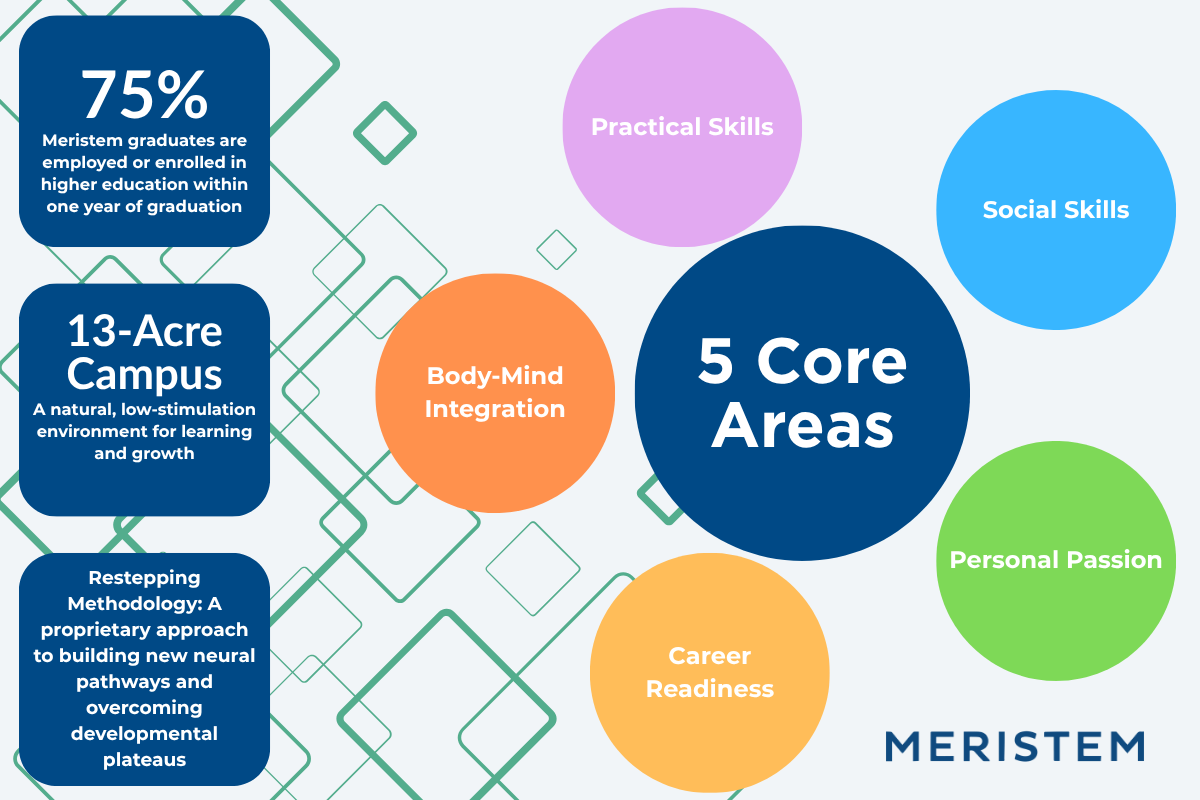
Our approach is built on the recognition that genuine independence is not achieved by addressing academic, social, and vocational skills in isolation. Instead, these domains are deeply interconnected and must be developed in concert. We have structured our program around Five Core Areas of Development, each one infused with the evidence-based practices discussed throughout this guide.
| Meristem’s 5 Core Areas | Integrated Evidence-Based Practices |
|---|---|
| Life Skills & Social Skills | Behavioral Skills Training (BST), Social Learning Theory, Scaffolding for Daily Living Tasks, Group-Based Projects |
| Therapeutic Movement | Sensory Integration, Mindfulness-Based Practices, Regulation Through Physical Activity |
| Land & Nature Immersion | Nature-Based Interventions (NBIs), Attention Restoration Theory, Experiential Learning in Natural Settings |
| Craft & Resistance Training | Experiential Learning (Forge, Woodshop, Kitchen), Productive Struggle, Scaffolding, Restepping Methodology |
| Self-Leadership & Executive Functioning | Kolb’s Reflective Cycle, Gradual Release of Responsibility, Montessori-aligned Autonomy, Interest-Led Projects |
How the Pieces Fit Together: A Day at Meristem
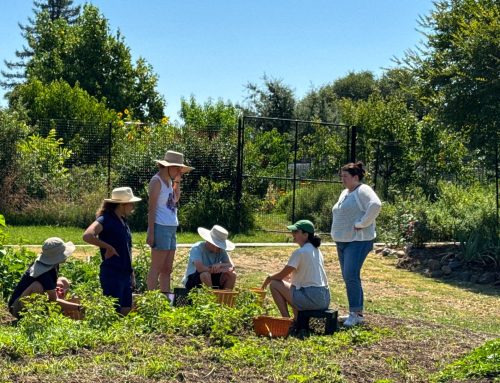
To understand how this integration works in practice, consider a typical day at Meristem. A student might start their morning in the organic garden, a nature-based setting perfect for sensory regulation. Here, they are engaged in the concrete experience of planting seeds. This isn’t just a chore; it’s a lesson in biology, planning, and patience. The task is scaffolded by an instructor who models the correct technique (“I Do”), works alongside the student (“We Do”), and then provides support as the student works independently (“You Do”).
Later, in the culinary arts kitchen, that same student might be part of a team preparing a meal. This is a group-based, experiential learning project that requires social communication, collaboration, and problem-solving. An instructor might use principles of BST to model how to ask a teammate for help or to provide clear instructions. The feedback is immediate and tangible: the recipe either works or it doesn’t, and the team learns together how to adjust.
In the afternoon, a student might work on a personal project in the blacksmithing forge, a highly sensory-focused and interest-led activity that aligns with Montessori principles of hands-on, self-directed work. The process of heating, hammering, and shaping metal requires intense focus and provides a powerful outlet for creative expression. At the end of the day, during a group reflection session, the student engages in the reflective observation and abstract conceptualization stages of Kolb’s cycle, processing their challenges and successes with the support of peers and mentors.
This is the Meristem Method in action. It is a carefully orchestrated ecosystem of evidence-based practices, where every activity is designed to build multiple skills simultaneously. We are not just teaching students how to work; we are helping them develop the self-regulation, social competence, and executive function skills they need to thrive in any environment. Our 75% success rate in placing graduates in employment or further education is a direct result of this integrated, holistic, and deeply personalized approach.
Conclusion: A New Paradigm for Autism Education
The educational journey for autistic young adults has been fraught with challenges, largely because traditional models have failed to adapt to their unique neurological needs. However, as the body of scientific evidence grows, a new paradigm is emerging—one that is not based on forcing conformity, but on understanding and embracing neurodiversity. The most effective, evidence-based approaches are not about “fixing” autism, but about creating environments where autistic individuals can thrive.
We have seen that these powerful strategies—from the hands-on engagement of experiential learning to the profound regulatory benefits of nature-based interventions—share a common thread: they are active, sensory-rich, and deeply respectful of the individual learner. They move beyond rote memorization to foster genuine understanding, and they build skills not in sterile, artificial settings, but in the context of real, meaningful work. Methodologies like scaffolding, Behavioral Skills Training, and philosophies such as Montessori and Reggio Emilia provide the structure and support needed to build complex skills while honoring a student’s autonomy and intrinsic motivation.
Ultimately, the research points to a clear conclusion: no single method is a magic bullet. The most profound and lasting outcomes are achieved through an integrated, holistic approach that weaves these evidence-based practices into a cohesive whole. This is the philosophy that drives the Meristem Method. By creating a supportive, experiential, and nature-based learning ecosystem, we provide a space where autistic young adults can develop the full suite of skills—personal, interpersonal, and professional—necessary to build independent, successful, and fulfilling lives.
Take the Next Step
Are you a parent, professional, or educator looking for an educational model that truly understands and supports autistic young adults? Do you believe in the power of experiential learning and nature-based education to unlock potential? If the evidence-based, integrated approach of the Meristem Method resonates with you, we invite you to learn more.
Learn More About Meristem’s Programs for Young Adults with Autism
Discover how our 13-acre campus, dedicated team of experts, and proven methodology can make a difference. See for yourself how we are putting these evidence-based practices into action every day to help our students build the skills and confidence they need to thrive.
References[1] Kolb, D. A. (2014). Experiential learning: Experience as the source of learning and development. FT press.
[2] Fan, M. S. N., Li, W. H. C., Ho, L. L. K., Phiri, L., & Choi, K. C. (2023). Nature-Based Interventions for Autistic Children: A Systematic Review and Meta-Analysis. JAMA Network Open, 6(12), e2346715.
[3] Kaplan, S. (1995). The restorative benefits of nature: Toward an integrative framework. Journal of environmental psychology, 15(3), 169-182.
[4] Li, D., & Sullivan, W. C. (2016). Impact of views to school landscapes on recovery from stress and mental fatigue. Landscape and Urban Planning, 148, 149-158.
[5] Archer, A. L., & Hughes, C. A. (2011). Explicit instruction: Effective and efficient teaching. Guilford Press.
[6] Miltenberger, R. G. (2012). Behavioral skills training procedures. In W. W. Fisher, C. C. Piazza, & H. S. Roane (Eds.), Handbook of applied behavior analysis (pp. 315-329). The Guilford Press.
[7] Li, Y. (2025). Global autism prevalence, and exploring Montessori as a practical educational solution: a systematic review. Frontiers in Psychiatry, 16, 1604937.
[8] Edwards, C., Gandini, L., & Forman, G. (Eds.). (2012). The hundred languages of children: The Reggio Emilia experience in transformation. ABC-CLIO.
Voices of Community Podcast
Join us for conversations with autistic adults, families, and professionals who are helping shape a more inclusive world. Each episode shares personal stories, insights, and perspectives from across the Meristem community and beyond.